
AI
What Can One AI Audit Record Actually Prove?
A single audit record lands on the table. One confirmation prompt, one tool execution, one side effect. The hash chain verifies. The signature checks out.
What does that prove?
Most teams answer instantly and wrongly: the event happened, and the record is true. That sentence hides five separate questions. A single record — even a perfectly signed, perfectly chained one — usually answers one or two of them.

图示:来源页预览图(仅作编辑上下文;版权归属原发布方) · 来源引用:dev.to
The Five Questions Inside "We Have an Audit Record"
Layer 1 — Occurrence. Did anything actually happen at time T? A record asserts it. Assertion is not occurrence. A record can be written by an agent that hallucinated a tool call, by a retry that never landed, or by a logging path that fires before the side effect. Occurrence needs a second, independent witness.
Layer 2 — Integrity. Has this record been altered since capture? This is where signatures and hash chains live, and it is the only layer a valid signature actually reaches. A hash chain proves internal consistency: record N commits to record N-1. It proves nothing about whether record N was true when written.
Layer 3 — Coverage. Is this record representative, or is it the one we happened to keep? Write-path gaps, sampling, dropped spans, and the classic "the agent disabled its own logging" failure. One record cannot prove coverage, because coverage is a property of a set, not an element.
Layer 4 — Attribution and authority. Was the actor who it claimed to be, and were they permitted to do this? A record showing agent: support-bot-v3 executed delete_account is not evidence the bot was authorized to. Identity assertion inside a signed record is a claim, not a check.
Layer 5 — External consequence. Did the side effect actually land in the world outside your system? Your record says the payment API returned 200. That is your system's belief about a third party's state. The third party's own ledger is the evidence.
One record does not prove all five layers. Signature reaches the second. Coverage and external result are separate checks entirely.
The Failure Mode Is Overclaiming, Not Logging
The dangerous sentence in an incident review is not "we don't know." It's "the audit log shows." That phrase silently promotes a Layer-2 artifact into a Layer-1-through-5 conclusion, and nobody in the room notices the leap.
The tell: when you ask "how do you know?" the answer is the same artifact, restated. "Because the audit record says so." That is circular. It works for disputes about tampering and fails for disputes about truth.
Hash chains are genuinely good — they turn "we think this is unmodified" into "we can demonstrate this is unmodified." That is real, and it matters for regulatory defensibility. But notice the scope: it protects the container, not the claim. A signed, chained, timestamped record of something that never happened is a perfectly valid artifact.
Counterpoint: One Record Is Still Worth More Than Zero
The honest pushback — and the one I'd make — is that this framework can become an excuse for paralysis. Demanding five-layer proof before shipping an agent is how you get no audit trail at all, which is strictly worse than an imperfect one.
Fair. So the calibrated position is:
- A single record is a seed, not a verdict. It justifies a hypothesis and directs investigation.
- Evidence degrades gracefully. Layer 2 alone is enough to defend a claim in a dispute about tampering; it is not enough to assert the event to a regulator.
- Match the claim to the layer. "We can show this record was not modified" is supportable from one record. "We can show this action occurred and was authorized" is not.
The failure is not logging too little or too much. It's letting the strongest thing you can prove (integrity) stand in for the hardest thing to prove (consequence). Precision about scope costs one sentence in the runbook and saves an incident review.
A 30-Day Action Plan
Week 1 — Classify existing claims. Pull the last five incident reports or customer-facing security statements that reference audit logs. For each, label which layer the claim actually rests on. Most teams find 60–80% of claims are Layer 2 dressed as Layer 1 or 5. Write the gap down.
Week 2 — Add one independent witness per critical path. For every side effect that matters, find a second source that does not share a write path with your audit log: the payment provider's ledger, the cloud API's own event history, the database's transaction log, the recipient's inbox. Where none exists, mark that path as Layer 5 unproven in the risk register. This is the highest-value week.
Week 3 — Measure coverage, don't assert it. Pick three high-risk tool integrations and compare executions observed by the tool runtime against records in the audit store over 24 hours. Report the ratio. A ratio below 1.0 is the finding — publish it internally rather than fixing it quietly. Set a target and a monitoring alert on the delta.
Week 4 — Rewrite the promise. Update your audit documentation and any compliance language to state, per record type, exactly which layers are evidenced and which are inferred. Add one sentence to the agent runbook: a valid signature proves integrity only. Then define the escalation path when a reviewer needs Layer 4 or 5 — who produces the authorization record, who contacts the external party.
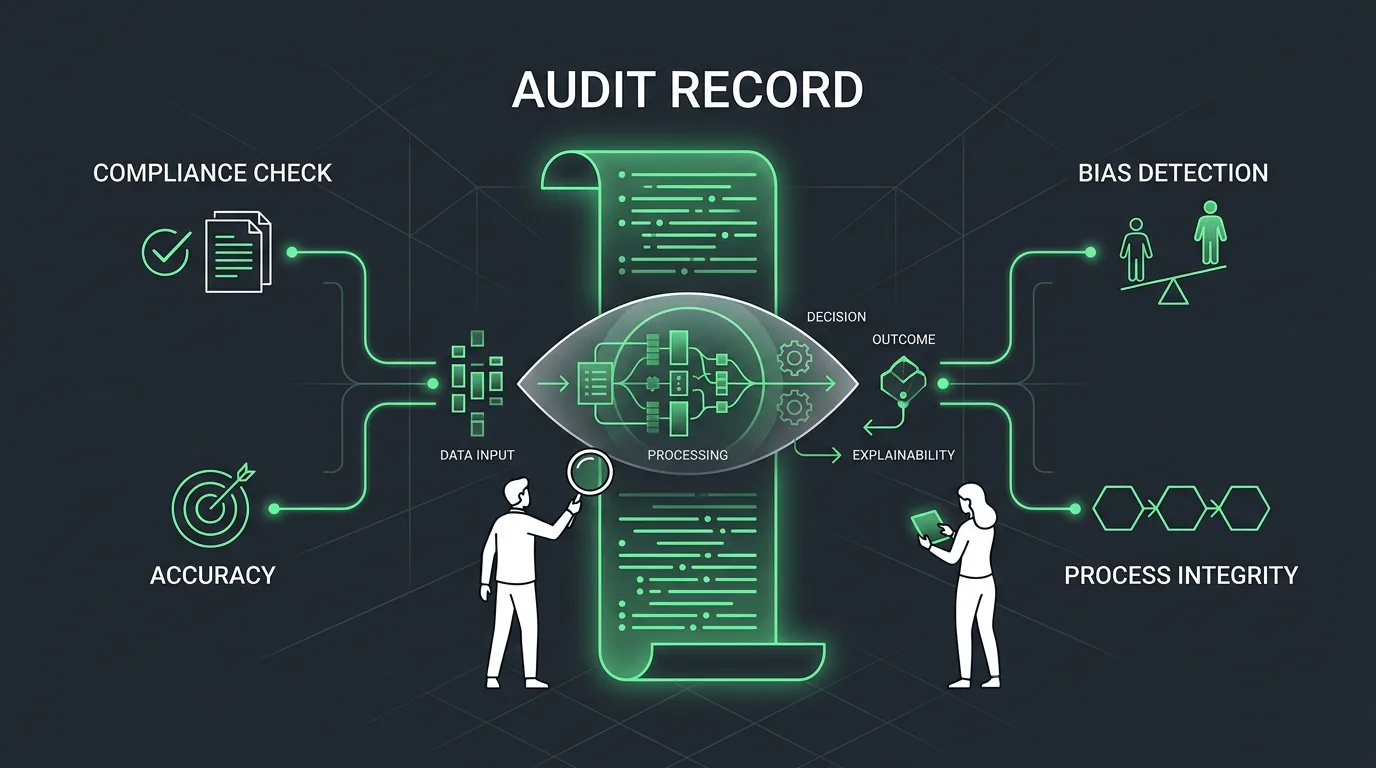
图示:HEXOPS 原创配图(受选题启发,非复制原文图片) · 来源引用:dev.to
The Takeaway
The audit record industry is converging on better integrity — transparency logs, Merkle proofs, signed provenance. Good. But integrity is the cheap layer, and it's the one that feels like completeness because it's cryptographically satisfying.
The hard layers are coverage and consequence, and neither comes from a signature. They come from a second, independent source that has no incentive to agree with you.
If you can't name that source for a given action, you don't have five-layer evidence. You have one true statement about one file, and a story you're telling about the world.
Sources
- Rain6fish, "What Can One AI Audit Record Actually Prove?", DEV Community — the five-layer framing this piece builds on.
- NIST SP 800-92, Guide to Computer Security Log Management — log integrity, coverage, and retention as distinct control objectives.
- RFC 6962, Certificate Transparency — Merkle-tree hash chaining and what inclusion proofs do and do not attest.
- Sigstore / Rekor documentation — transparency-log design for signed artifacts; explicit scope of integrity claims.
- OpenTelemetry Semantic Conventions — span and event modeling; guidance on dropped data and sampling as coverage risks.
- C2PA Technical Specification — provenance manifests and the distinction between assertion signing and content truth.