Comparison
Rebranding the Machine: A Selection Guide for Naming AI Compute Infrastructure
OpenAI may be considering a new label for its data centers. Here's how to decide whether a rename is strategy or cosmetics — and which name fits which situation.
TechCrunch reported on November 1, 2026 that OpenAI might rebrand its data centers as "AI compute campuses." The framing in the report is blunt about the motive: data centers are deeply unpopular, but what if we called them something else?
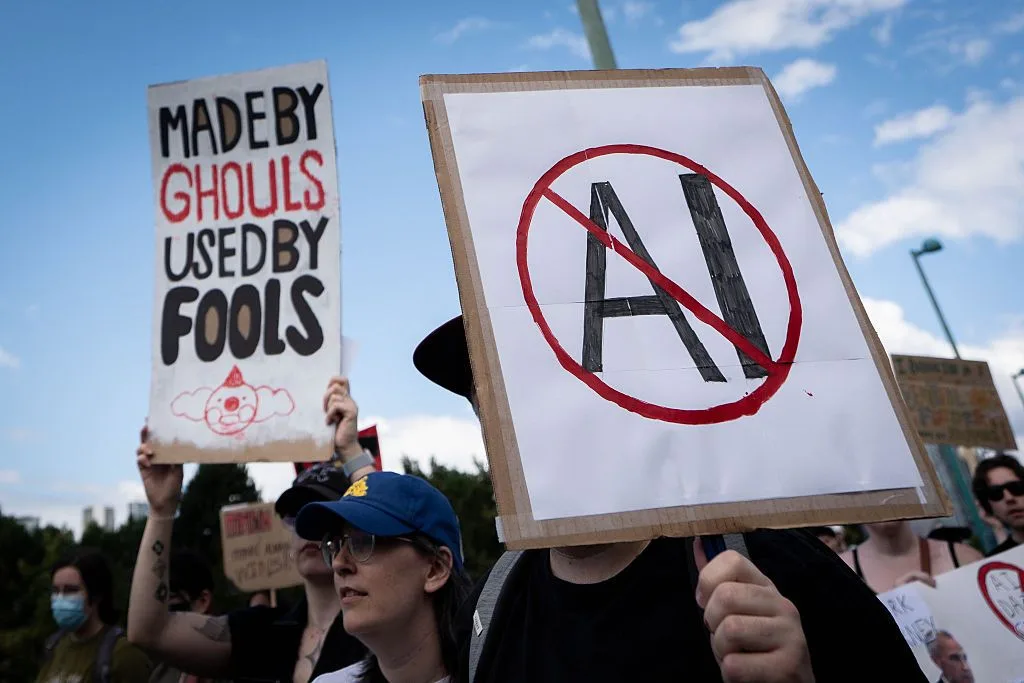
That single sentence is worth taking seriously, because it contains an assumption that is either very smart or very expensive. The assumption is that a meaningful share of local opposition is lexical — triggered by the words "data center," which now summon images of diesel generators, substation queues, and 400,000-gallon water draws — rather than material: real load growth, real noise, real ratepayer impacts.
This guide treats the rename as a genuine decision with options, criteria, and failure modes. It is written for operators, economic development offices, and infrastructure investors who will have to pick a vocabulary and live with it.
图示:来源页预览图(仅作编辑上下文;版权归属原发布方) · 来源引用:techcrunch.com
The options
A. Keep "data center." The incumbent term. Technical, boring, well-understood by lenders and regulators. It carries accumulated negative association but also zero accusations of euphemism.
B. "AI compute campus." The OpenAI-style option. "Campus" borrows from universities and corporate headquarters: landscaped, walkable, employment-generating, permanent. "Compute" replaces "data," which sounds like storage of other people's files, with something that sounds like work being produced.
C. "AI factory." NVIDIA's preferred frame. Honest about industrial character: inputs (power, chips), outputs (tokens), shifts, logistics. It doesn't promise beauty, and it doesn't hide the machines.
D. "Compute corridor" / "innovation park" / "digital infrastructure district." The civic framing, usually adopted by a region rather than a company. Positions the facility as anchor infrastructure for a cluster of employers.
E. "Dedicated AI cluster" / "private compute environment." The enterprise framing for capacity that lives inside existing buildings or leased space. Almost invisible to the public.
F. "Edge compute node." Small-footprint, demand-adjacent, deliberately unglamorous. Sounds like a utility cabinet, which is often the point.
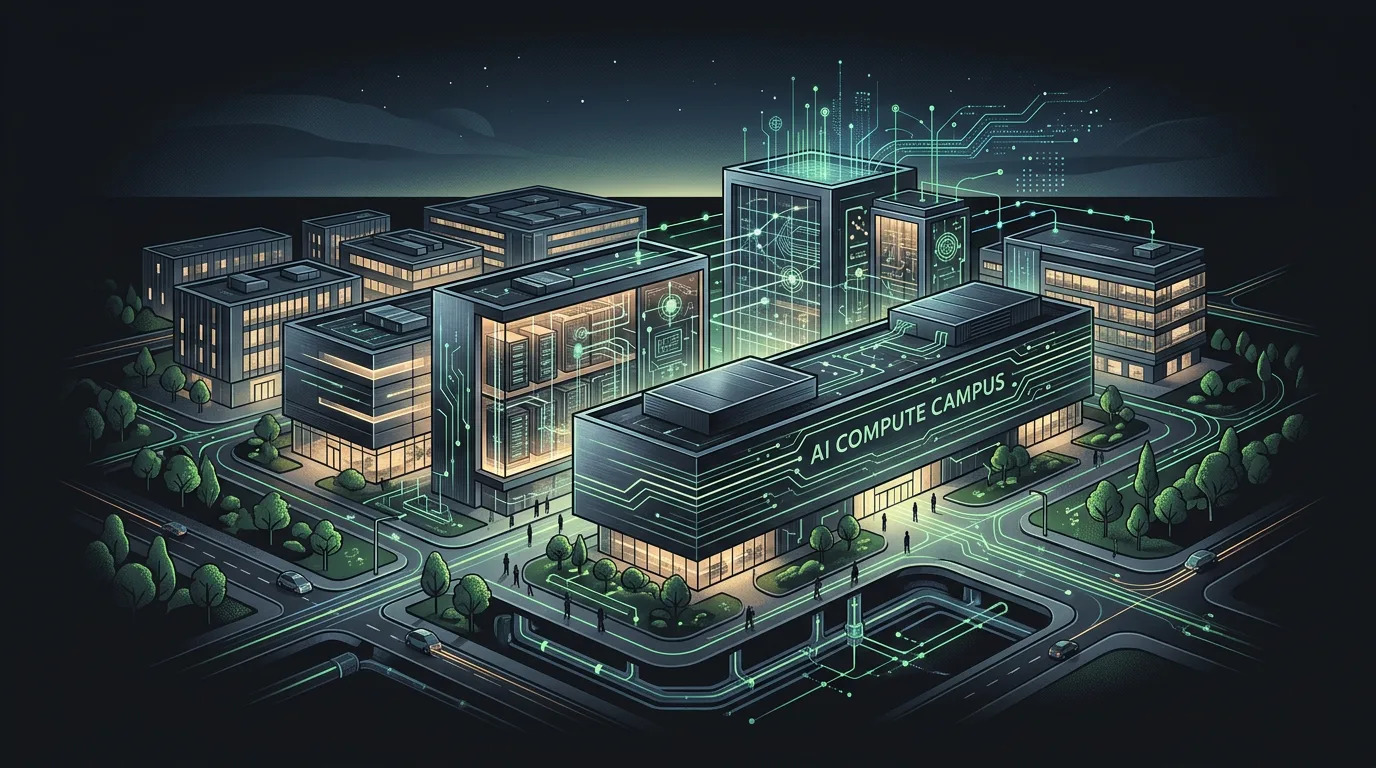
图示:HEXOPS 原创配图(受选题启发,非复制原文图片) · 来源引用:techcrunch.com
Selection criteria
Before scoring options, decide what the name actually has to do. Five criteria carry most of the weight.
| Criterion | What it tests | Why it matters |
|---|---|---|
| Planning tolerance | Will the label lower or raise friction with councils, zoning boards, and hearing attendees? | Permitting timeline is the binding constraint on delivery. |
| Community consent | Does it read as a neighbor or an imposition? | Opposition organized before the application is the expensive kind. |
| Investor legibility | Do analysts, lenders, and insurers know what asset class they're underwriting? | Novel vocabulary creates diligence drag and comparables risk. |
| Talent and partner signal | Does it attract engineers and utility partners? | Hiring for power and cooling is competitive. |
| Overpromise risk | Does the name commit you to things you won't deliver (amenities, jobs, "innovation")? | A broken promise converts into a hostile witness. |
Add two operational criteria: scale headroom (does the term still fit at 1 GW?) and switch cost (signage, legal entities, contracts, disclosure obligations).
| Option | Planning tolerance | Community consent | Investor legibility | Talent signal | Scale headroom | Overpromise risk | Switch cost |
|---|---|---|---|---|---|---|---|
| A. Data center | Low–Med | Low | High | Med | High | Low | Low |
| B. AI compute campus | Med–High | Med | High | High | High | Med–High | High |
| C. AI factory | Low | Low | High | High | High | Low | Med |
| D. Compute corridor | High | Med–High | Med | Med | Med–High | High | High |
| E. Dedicated AI cluster | High | High | Med | Med | Low | Low | Low |
| F. Edge compute node | High | High | Low–Med | Med | Low | Low | Low |
Recommendation by scenario
Greenfield hyperscale, 500 MW+, politically receptive jurisdiction: Option B. This is the case where "campus" earns its keep. The scale is real, the timeline is long, and the operator will be a civic actor for a decade — landscaping, road upgrades, and a fire station are plausibly on the table. Pair the name with a published, quantified community benefits agreement. Without that, "campus" reads as a euphemism by the second hearing.
Retrofit or urban infill in a hostile metro: Option A or E. Do not rebrand into a fight you're already losing. Where opposition is high and the footprint is leased rather than built, a new name invites the accusation that you're hiding something. Lead instead with the numbers that answer the real objection: incremental grid load, water use effectiveness, dBA at the property line, and firm capacity you're funding. The label should be the least interesting thing in the room.
Publicly traded operator or infrastructure fund: Option A in filings, with a disciplined exception. Analysts price comparables. Introducing a proprietary asset class mid-cycle creates avoidable confusion in disclosures and insurance schedules. If you want the community-facing name, use it as a site name with one consistent gloss — "X Campus (a data center facility)" — and keep legal entities stable. Dual-track naming is defensible; inconsistent dual-track naming is a disclosure risk.
Regional economic development body: Option D, but only with a real ecosystem plan. "Corridor" and "district" are the highest-risk terms in the table because they are the most promissory. They imply multiple tenants, shared infrastructure, and workforce spillover. Adopt them after you have the anchor lease and the training pipeline, not before. A corridor with one building is a punchline.
Enterprise deployment, 1–10 MW, inside existing real estate: Option E. No public dimension, no brand decision. "Dedicated AI cluster" is precise, procurement-friendly, and won't leak into a planning meeting.
Colocation near demand centers, sub-10 MW: Option F or A. Small nodes gain nothing from aspirational naming and lose credibility when neighbors discover the actual size. Understate.
What renaming cannot fix
Three failure modes are worth naming explicitly.
Compute-washing. If the term "campus" appears in a press release while the water and power figures stay undisclosed, regulators and reporters will treat the vocabulary as a disclosure problem rather than a marketing one. The reputational cost is asymmetric: a euphemism discovered is worse than a blunt term defended.
The campus promise trap. "Campus" imports expectations — shared space, walkability, jobs for locals, permanence. Many AI facilities are sheds with a security perimeter, staffed by a few dozen people. Every imported expectation that goes unmet becomes testimony at the next hearing.
Two-audience inconsistency. Communities hear one name, capital markets another, and a planning officer eventually reads both. The reputational damage from that gap exceeds any permitting gain.
The honest version of the OpenAI bet is not "call it something else." It's "call it something else and change what it is" — published interconnection numbers, real water accounting, funded grid upgrades, and a benefits agreement with teeth. A name lowers the temperature of the first meeting. It cannot substitute for the second.
Sources
- TechCrunch, "OpenAI might rebrand its data centers as 'AI compute campuses'," November 1, 2026. https://techcrunch.com/2026/11/01/openai-might-rebrand-its-data-centers-as-ai-compute-campuses/
- Analysis and scoring in this article are the author's own judgment based on reported framing; option labels such as "AI factory" reflect widely used industry terminology, and no claim is made about any company's final decision.