MCP
Fireworks AI Says Open-Weight Models Are the Cheap Lane for Enterprise AI — Mind the Asterisk
News brief for builders: what happened, why it matters, what to watch next.

图示:来源页预览图(仅作编辑上下文;版权归属原发布方) · 来源引用:dev.to
What happened
Fireworks AI co-founder Chenyu Zhao used a TechCrunch interview to make a straightforward commercial argument: open-weight models are no longer the compromise option. For a large class of enterprise workloads, they are the cheaper — and increasingly the sensible — default.
Fireworks is an inference and model-customization company. It serves other companies' models and helps customers adapt them with their own data, which means Zhao's claim is simultaneously a market thesis and a pitch for his own product line. Both things can be true.
His case rests on three claims:
- Smaller is a feature. Open-weight models tend to be smaller, faster, and cheaper to serve than the frontier systems from Anthropic and OpenAI.
- Specialization beats generality. Enterprises can tune a model to the task they actually have, instead of renting broad capability they never touch and paying for it on every token.
- The gap closed. Since DeepSeek and the wave of capable open releases that followed, the distance between open-weight and frontier systems has narrowed enough that "close enough" is now a defensible production decision rather than a budget compromise.
The interview had a second half that got less airtime but matters more to anyone with a contract: Zhao also addressed two security incidents Fireworks disclosed, which affected customer credentials and data.
Why it matters
The economics are the story. Most teams that shipped LLM features in the last two years built on a single frontier API because it was the only thing that reliably worked. That default is now expensive in two ways — per-token price, and the architectural lock-in of prompt shapes, tool schemas, and eval suites tuned to one vendor's quirks.
Open weights change the second cost more than the first. If a model can be self-hosted, fine-tuned, or swapped behind a stable interface, the buyer regains leverage: you can benchmark two providers against your own task, negotiate, or move the workload in-house when volume justifies it. That's a structural shift in bargaining position, not just a discount.
There's also a fit argument that's easy to underrate. Enterprise workloads are frequently narrow — classification, extraction, routing, retrieval-augmented answering over an internal corpus, structured generation against a fixed schema. A 7B-to-70B-class model fine-tuned on a few thousand well-labeled examples often outperforms a general frontier model on that specific task, at a fraction of the latency and cost. Zhao's framing is essentially: stop paying for generality you don't use.
The counter-argument to hold onto
Vendor math deserves scrutiny. Per-token pricing is not total cost. The real bill includes:
- Evaluation and regression testing every time you consider a swap.
- Prompt and harness rework, which is where most "cheap migration" projects quietly die.
- Operational surface: if you self-host, you now own GPUs, autoscaling, quantization choices, and an on-call rotation.
- Quality tax: a cheaper model that's 3% worse on your highest-value task can cost more in human review than it saves in inference.
Fireworks' incentive is to sell tokens — cheaper open models at higher volume is a good business for an inference provider even when it's a bad fit for a particular customer. Run the comparison on your own eval set, with your own data, before believing anyone's benchmark.
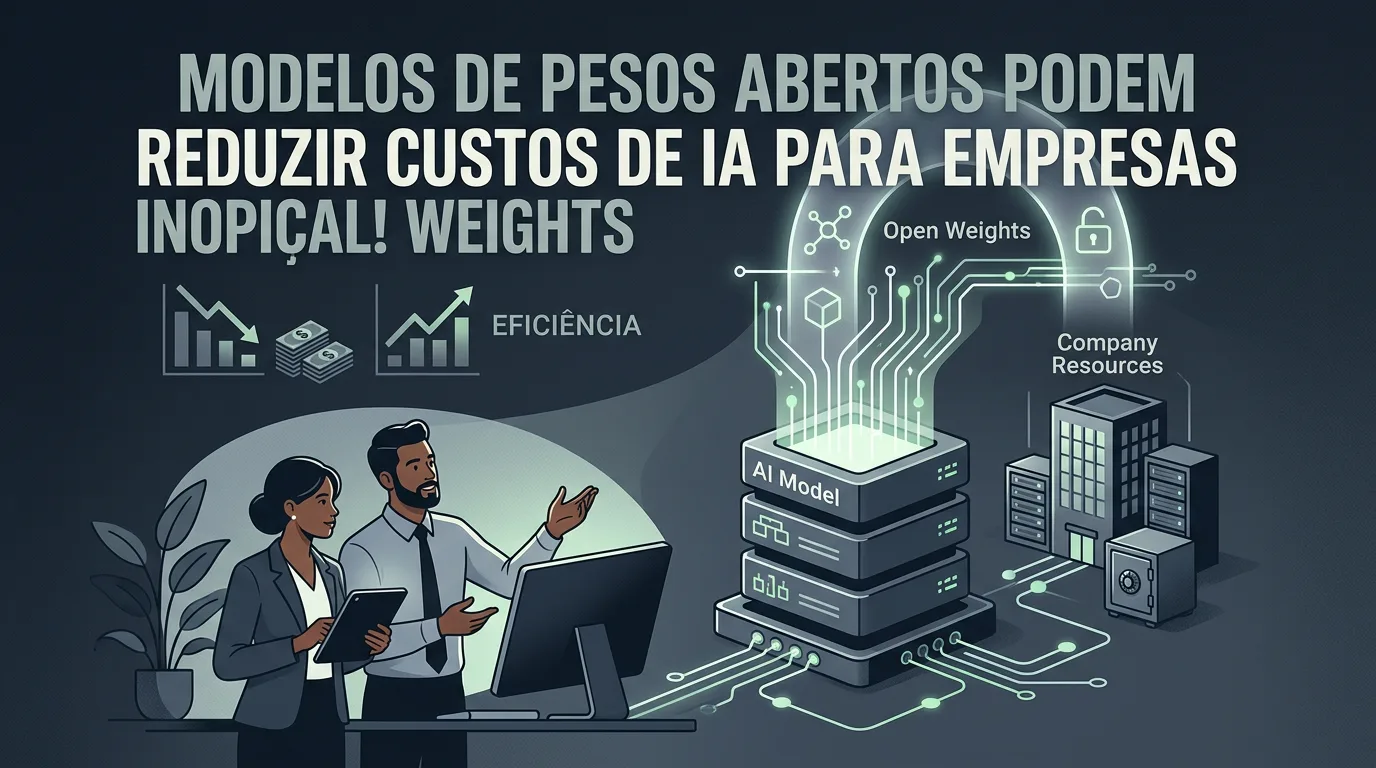
图示:HEXOPS 原创配图(受选题启发,非复制原文图片) · 来源引用:dev.to
The security asterisk
The part builders should not skim: Fireworks disclosed two security incidents affecting customer credentials and data, and Zhao addressed them in the same interview.
Those are precisely the two categories that matter most when you route production traffic through a managed inference provider. Credentials are the keys to your account, your spend, and potentially your fine-tuning jobs. Customer data is the thing your own compliance review is supposed to protect. Any team evaluating a third-party inference layer should be asking the same questions they'd ask a database vendor:
- What exactly was exposed, for how long, and who was notified?
- Were credentials rotated by default, or only on request?
- What changed in the architecture and access model as a result?
- Where does prompt and completion data live, how long does it persist, and can it be used for training?
- Is there a data-processing agreement that survives a red-team read?
A cost story and a trust story are being told by the same company at the same time. Both are legitimate; only one of them shows up in your invoice.
What to watch next
- Concrete benchmark disclosure. "Close to frontier" needs numbers on tasks enterprises actually run, not leaderboard composites. Watch for third-party evals rather than vendor-published ones.
- Post-incident transparency. Whether Fireworks publishes a detailed write-up — root cause, blast radius, remediation — is a better signal of maturity than any apology.
- Fine-tuning economics in practice. The pitch only holds if tuned small models beat prompted large models on real, messy enterprise data. Ask for reference customers, not case studies.
- The frontier response. If Anthropic and OpenAI keep cutting prices on small models, the open-weight arbitrage narrows and the decision reverts to tooling and trust.
- Where regulated buyers land. Finance and health will move last — and their eventual choices will tell you which way the enterprise default actually swings.
Bottom line: the open-weight argument is stronger than it was eighteen months ago and worth testing on a contained workload this quarter. Just run it as a bake-off with an exit ramp — and read the security disclosures before you hand over the keys.
Sources
- Guia de TI, "Fireworks AI diz que modelos de pesos abertos podem reduzir custos de IA para empresas" — https://dev.to/guiadeti/fireworks-ai-diz-que-modelos-de-pesos-abertos-podem-reduzir-custos-de-ia-para-empresas-2lm5
- Underlying interview: TechCrunch, conversation with Fireworks AI co-founder Chenyu Zhao (as reported by the above).