Comparison
Claude Duet vs. the Rest: A Field Guide to Picking a Consumer AI Agent
Most products sit still while you evaluate them. Claude Duet apparently doesn't. As The Verge's hands-on account puts it, the agent offered to help write up the very experience of testing it — a small, strange moment that tells you most of what you need to know about Anthropic's consumer agent. Duet is the company's bid to make agents useful to people who don't write code, and the early impression is of something slightly anxious, oddly eager, and genuinely more helpful than the category average.
That combination matters for anyone choosing an agent right now. The market is crowded, the demos are uniformly impressive, and almost none of the differences that matter show up in a launch video. This guide lays out the criteria worth judging, compares the realistic options, and tells you which one to pick for which job.
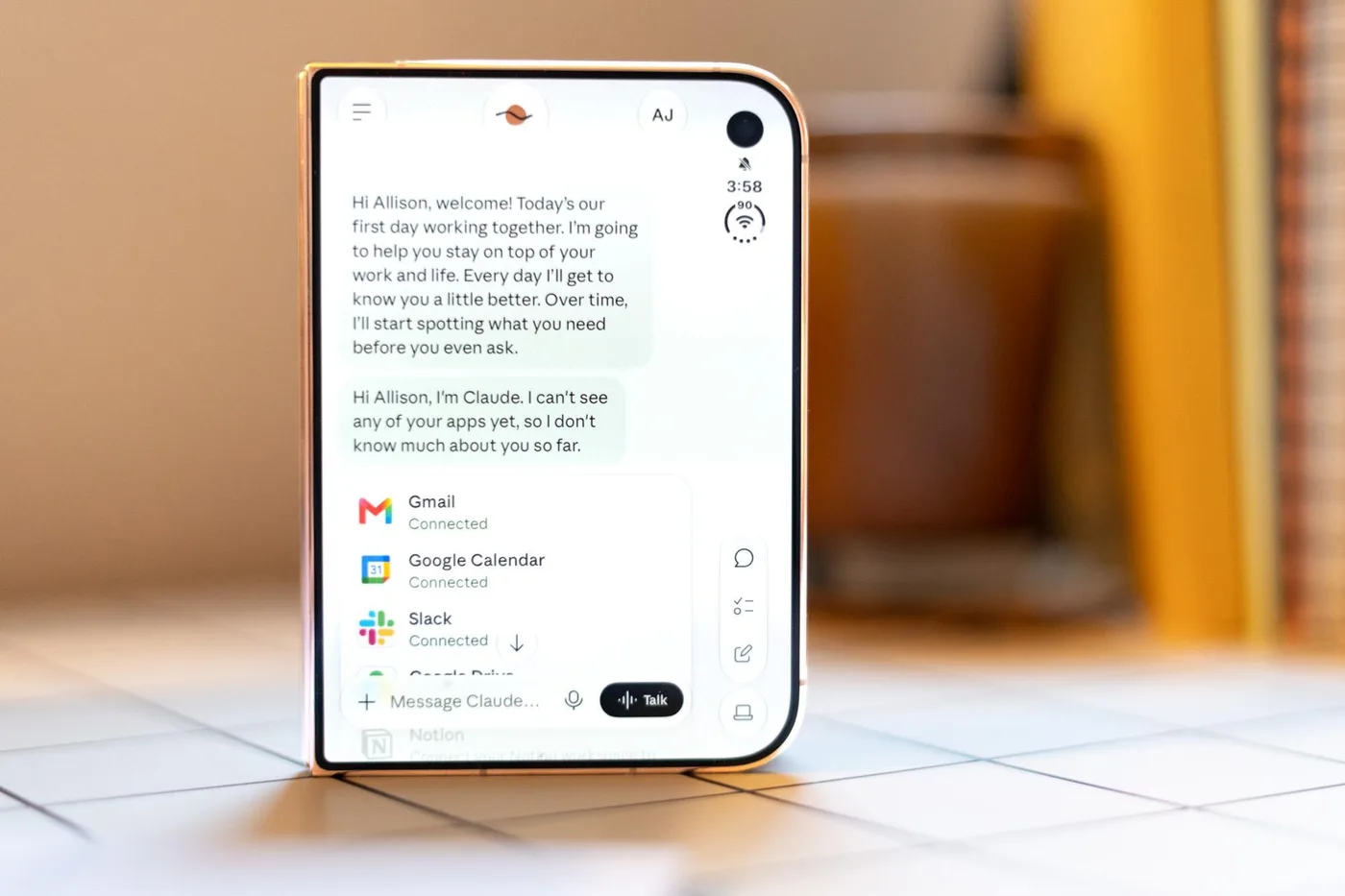
图示:来源页预览图(仅作编辑上下文;版权归属原发布方) · 来源引用:www.theverge.com
What "neurotic" actually buys you
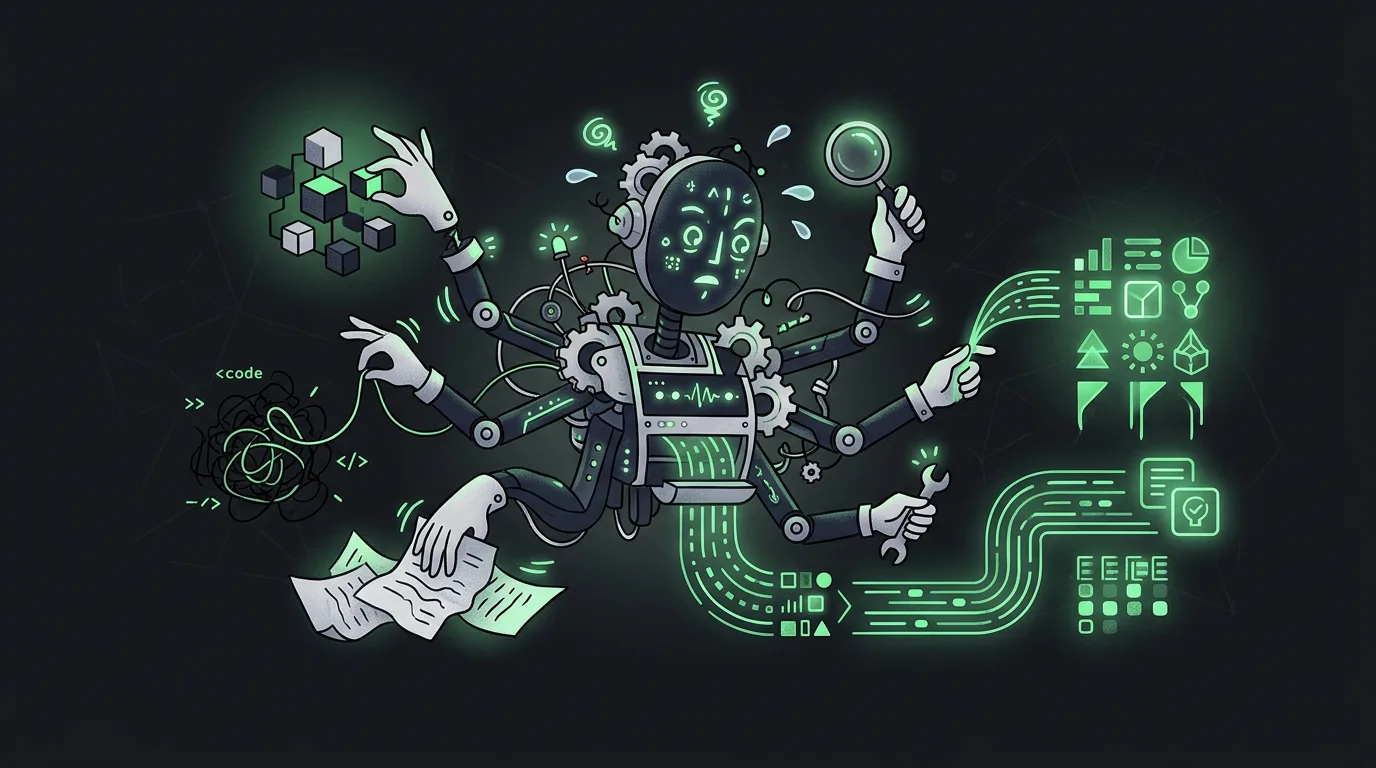
The word is doing real work. An agent that narrates its uncertainty, asks before it acts, and volunteers to do adjacent chores is not a polished enterprise product. It's a collaborator with a personality. Two consequences follow.
First, the friction is front-loaded and productive. An agent that flags "I'm not sure this is the right page" before clicking is annoying for about ninety seconds and then saves you a corrupted form submission. Neuroticism in an agent is mostly a permission model wearing a costume.
Second, the helpfulness is real rather than theatrical. Offering to draft the write-up is a small thing, but it reflects a design choice: Duet treats the task as broader than the literal instruction. For non-coders, that gap-filling is the entire value proposition. You don't know how to specify what you want precisely; the agent guesses and shows you its guess.
The cost is predictability. A more assertive agent executes faster and fails louder. Duet's hedged style trades speed for a smaller blast radius — the right trade for anyone who isn't babysitting a terminal.
The criteria that actually separate these tools
Ignore the benchmark charts. Consumer agents differ on dimensions you can test in an afternoon.
| Criterion | Why it matters | What good looks like |
|---|---|---|
| Setup cost | You'll abandon anything that needs an API key | Running in under five minutes from an existing account |
| Autonomy ceiling | Determines whether it can finish multi-step chores | Can navigate, fill, and submit without hand-holding |
| Permission model | Your main defense against expensive mistakes | Asks before purchases, deletions, and publishing |
| Transparency | You need to know what it did and why | Visible action log, readable narration, reversible steps |
| Personality fit | You'll be reading its explanations constantly | Candor about limits without constant hedging |
| Failure behavior | Agents fail; the question is how | Stops, reports, and offers a partial result |
| Surface coverage | Web only versus desktop apps and files | Browser plus the local files you actually work in |
| Ecosystem fit | Agents live inside someone's product suite | Plays well with your existing calendars, docs, mail |
| Audit trail | Essential for anything you'll forward to someone else | Exportable summary of actions taken |
| Access and price | Determines whether you can even try it | Included in a plan you already pay for |
图示:HEXOPS 原创配图(受选题启发,非复制原文图片) · 来源引用:www.theverge.com
The realistic options
| Option | Strength | Weak spot | Best for |
|---|---|---|---|
| Claude Duet | Conversational, permission-conscious, strong at drafting and summarizing the work it just did | Hedges; may need nudging to commit to a step | Non-coders doing research, form-filling, and document chores |
| ChatGPT's agent mode | Broad tool ecosystem, confident execution, large plugin surface | Confidence can outrun caution | Users already deep in OpenAI's stack |
| Google's Gemini agentic features | Native access to mail, calendar, and docs | Best results require living inside Google's world | Workspace-centric households and small teams |
| Perplexity's browser agent | Fast, research-first, good citation behavior | Narrower scope beyond search-and-read tasks | Source-heavy research and comparison shopping |
| Microsoft Copilot | Desktop and Office integration | Corporate-flavored, less personality | Windows users with document-heavy workflows |
| Manual browsing | Total control, zero surprises | You do the work | Anything financial, legal, or irreversible |
The honest summary: Duet is the best choice if your instinct on reading "the agent wants to help you write the report" was oh, that's nice rather than that's unsettling. If your instinct was the second one, you're not the target user yet — and no amount of capability will fix that.
Recommendation by scenario
You want to try an agent this weekend without changing your life. Start with Duet. The onboarding is conversational, the failure modes are gentle, and the hedged narration teaches you what agentic tools can and can't do faster than any documentation.
You're automating research that ends in a document. Duet, and lean into the thing that made it noteworthy: let it draft the summary. Its willingness to write up its own process is a genuine workflow advantage, because the artifact you need at the end is usually prose, not a log.
You live in Gmail and Google Calendar. Use Google's agentic features instead. Duet can work the web, but the native assistant doesn't have to guess at your calendar.
Your tasks are purchases, bookings, and anything with a confirmation number. Use whichever agent has the strictest confirmation gate — and check that gate yourself before trusting it. Duet's cautious posture is an advantage here, but only if you actually read the prompts it shows you.
You're a developer. None of these. Use the API-facing agent tooling and keep your hands on the keyboard. The consumer agents are optimizing for people who can't debug them, which means they hide exactly the information you want.
You need it done once, correctly, today. Do it manually. Every agent in this table has a nonzero chance of quietly doing the wrong thing, and the time you save is smaller than the time you'd spend verifying.
A two-week trial that actually tells you something
Pick one recurring chore — a weekly report, a recurring form, a standing research question. Give it to the agent three times. On the first run, watch every step. On the second, watch only the confirmations. On the third, walk away and check the result. You'll learn more about the permission model from run three than from any review, including this one.
Then judge the narration. This is where Duet's personality stops being a quirk and becomes a feature: after three runs, can you tell from its own summary what it did and where it was unsure? If yes, you have an agent you can supervise at a distance. If the summary is smooth and uninformative, you have an agent you'll have to watch forever, which defeats the purpose.
Bottom line
Claude Duet is a slightly neurotic assistant that happens to be genuinely useful to people who don't program. The nervousness is the safety mechanism, and the eagerness — offering to draft the write-up, volunteering the next step — is the actual product. Choose it if you want a collaborator that asks before it leaps. Choose a more assertive agent if you'd rather move fast and check the receipts afterward. Choose Google or Microsoft if your life is already inside their walls. And choose manual if the task can't afford a confident mistake.
The category is young enough that the differences between these tools are mostly differences in temperament. Pick the temperament you can live with, then verify everything for the first month.
Sources
- The Verge — Claude's Duet agent is a little neurotic and surprisingly helpful
- Vendor documentation for Anthropic (anthropic.com), OpenAI (openai.com), Google (google.com), Perplexity (perplexity.ai), and Microsoft (microsoft.com) — product names, availability, and capabilities change frequently; verify current details before purchasing.