

agentic commerce
The checkout button is quietly leaving the screen. With ChatGPT's Wallet — currently a limited rollout for U.S. Pro subscribers — an assistant can carry a purchase from "find me this" to "it's ordered" without a human thumbing through a card form. That's the headline. The more useful story, for anyone running a storefront or a platform team, is the tooling stack underneath the headline: which layer each product owns, and where it will quietly fail you.
This roundup is organized by layer rather than by vendor, because agentic checkout is not one product. It's an intent layer, a protocol layer, and a settlement layer that all have to agree before money moves.
What "agentic checkout" actually means
Three things have to be true for an agent to buy something on your behalf.
Intent capture. The assistant has to resolve a vague human wish ("a rain shell, not too loud, under a hundred") into a specific SKU. This is the part everyone demos.
A machine-readable handshake. The merchant has to expose catalog, availability, tax, shipping and returns in a form an agent can trust — not a scraped HTML page. This is where most implementations quietly break, especially across borders where duties and localized pricing change the answer.
A delegated payment mandate. A token or credential that says: this agent, for this user, up to this amount, for this merchant, expiring at this time. Without a scoped mandate, you don't have agentic commerce — you have a bot with a saved card and no liability story.
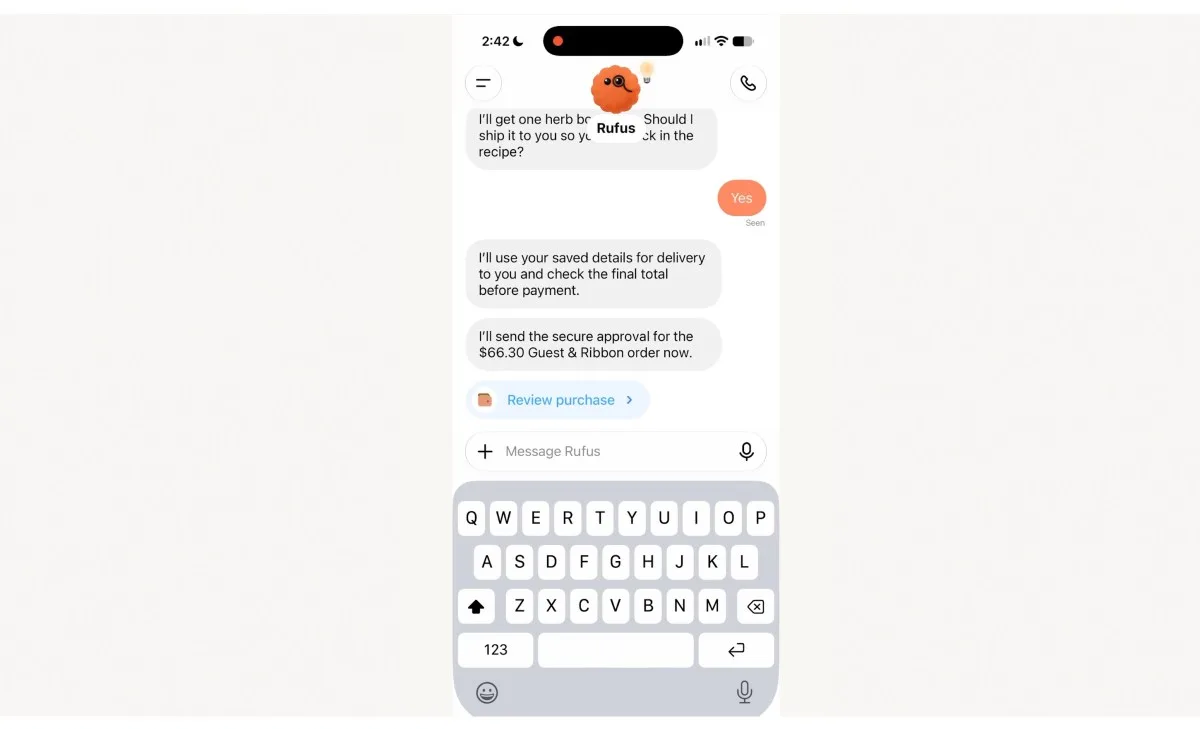
Figure: Editorial context image from the source page (preview only; rights remain with the publisher) · Credit / further reading: techcrunch.com
Most vendor pitches blur these three together. When you evaluate anything in this space, ask which layer it actually owns and which layer it assumes someone else solved.
The tool landscape
1. Assistant-native wallets: ChatGPT Wallet
The newest entry, and the one to watch for demand-side signal. The pattern: the assistant holds a payment relationship, the merchant exposes an agent-ready checkout surface, and the user confirms once. Strength — enormous existing intent volume, so conversion friction disappears for the consumer. Weakness — you are a supplier inside someone else's interface, with limited control over how your product is presented or ranked. Fit: consumer brands with clean structured catalog data and a tolerance for channel dependency. Not fit: high-consideration B2B, configured products, or anything where a wrong SKU is expensive.
2. Protocol-first stacks: ACP and AP2
OpenAI's Agentic Commerce Protocol and Google's Agent Payments Protocol both attack the handshake layer. ACP leans toward merchant-hosted checkout with an agent-readable feed; AP2 leans toward cryptographically signed mandates that travel with the transaction. The practical difference for a seller: ACP asks you to publish your catalog in a defined shape; AP2 asks you to verify a credential at authorization time. Fit: platforms and mid-market merchants who want to serve many assistants at once rather than betting on one. Caveat: protocol adoption is uneven, and "supports the spec" often means "supports the happy path."
3. Card-network rails: Visa Intelligent Commerce, Mastercard Agent Pay
These sit at the settlement layer and matter most when something goes wrong. Their value is dispute and liability framing: when an agent buys the wrong size, who eats it? If your category has high return rates, choose the rail that gives you a defensible chargeback story before you choose the shiny assistant integration.
4. Merchant-platform shortcuts: Shopify, Stripe and friends
If you already run on a major commerce platform, this is the cheapest path to being agent-reachable — the platform publishes your catalog and handles the credential check. The trade-off is uniformity: you get the default presentation, the default return policy handling, and the default ranking logic. Fit: long-tail catalogs and cross-border sellers who need reach more than differentiation.
5. Browser agents: Comet-style and operator-class tools
These drive a normal website as a human would. Nothing to integrate, nothing to certify. That is also the problem: they are brittle against bot defenses, they break on localization layers, and they carry the least liability clarity of any option here. Fit: internal ops, procurement research, price monitoring — not customer-facing checkout.
6. Payment APIs with agent SDKs
PayPal, Adyen and regional processors now ship developer surfaces for delegated credentials. If you already have engineering depth, this gives you the most control and the least platform lock-in. Fit: teams with a payments engineer on staff. Not fit: teams who want this working this quarter without hiring one.
When to use agentic checkout
- Your catalog is structured, stable and priced in one currency per region.
- Your return policy is simple enough to encode as rules.
- You want discovery volume more than brand control.
- Your average order value is low enough that a mis-buy is an annoyance, not an incident.
- You can instrument the funnel: what the agent saw, what it chose, what it paid.
When not to use it
- High-consideration purchases. Anything with configuration, sizing risk or compliance review should end with a human.
- Regulated goods. Age-gated, licensed, or export-controlled categories need a verified human in the loop.
- Thin-margin cross-border. If duties, VAT and FX already eat your margin, an agent's error rate is a direct loss multiplier.
- When you can't observe it. If you cannot log the agent's request context, you cannot debug conversions or disputes.
- When the mandate is unscoped. "Agent can spend up to some amount, sometime" is not a control.

Figure: HEXOPS original illustration inspired by the topic (not a copy of the source article imagery) · Credit / further reading: techcrunch.com
Pricing caveats worth reading twice
Almost nobody charges a clean per-checkout fee for this, and that's the trap.
Subscription bundling. Assistant-native wallets are usually gated behind a consumer plan tier, which means your reachable audience is a subset of a subset. Model your addressable demand accordingly, not against the assistant's total user count.
Interchange and platform fees. Protocol adoption often rides existing card economics. The new cost isn't a line item — it's a shift in who holds the customer relationship, and therefore who owns the lifetime value.
Infrastructure creep. Agent-readable feeds need to stay fresh. Stale availability data produces failed checkouts, and failed agent checkouts look like your fault, not the model's.
Return and dispute load. Agent-initiated returns tend to be higher-ticket in support time because the reasoning is opaque. Budget support hours, not just integration hours.
Rollout geography. Limited-region launches mean you may build for a capability most of your traffic can't use yet. Ship the plumbing, but don't rebuild your funnel around an early-access feature.
An ops checklist for cross-border teams
- Publish a structured feed with price, currency, duty treatment, stock and lead time per region.
- Encode returns as machine-readable rules, not prose.
- Scope every mandate: amount cap, merchant lock, expiry, category restriction.
- Log the full request context — the agent's query, the catalog response, the final order.
- Run a shadow mode first: agents propose orders, humans approve, you compare against baseline conversion.
- Keep one human-verified path for every category you sell.
Key takeaways
- Agentic checkout is three problems — intent, handshake, mandate — and vendors usually solve one.
- ChatGPT Wallet is a demand signal, not a strategy. Treat it as a channel and price the dependency.
- Pick your payment rail by your dispute and return profile, not by the demo.
- Protocol-first stacks (ACP, AP2) buy you multi-assistant reach at the cost of default presentation.
- Browser agents are for internal ops, not customer checkout.
- The real bill shows up in support load, data freshness and lost customer ownership — not in a per-transaction fee.
Next steps
Audit your catalog feed this week: if a machine can't answer "what does this cost delivered to this country, and can I return it," no wallet integration will save the conversion. Then pick exactly one layer to adopt — a merchant-platform shortcut if you need reach, a payment API if you need control — and run it in shadow mode for a full returns cycle before you let an agent spend real money.