agentic commerce
What the Oracle–OpenAI announcement actually signals
The headline reads like a product note: Oracle business applications and AI agents are being brought inside ChatGPT, while Oracle offerings get powered by OpenAI models in return. Read it as a pattern rather than a product launch.
The frontier labs have stopped selling a chat box and started selling distribution into the systems where work already happens — ERP, HCM, supply chain, CRM. Oracle brings the system of record and the enterprise sales motion. OpenAI brings the model layer and an interface employees already know how to use without a training deck.
For teams evaluating stacks, the practical question is not "should we move to ChatGPT" but "where should the agent live, and who owns the data contract underneath it." That framing is what separates a useful pilot from a six-month integration project that ends in a slide.
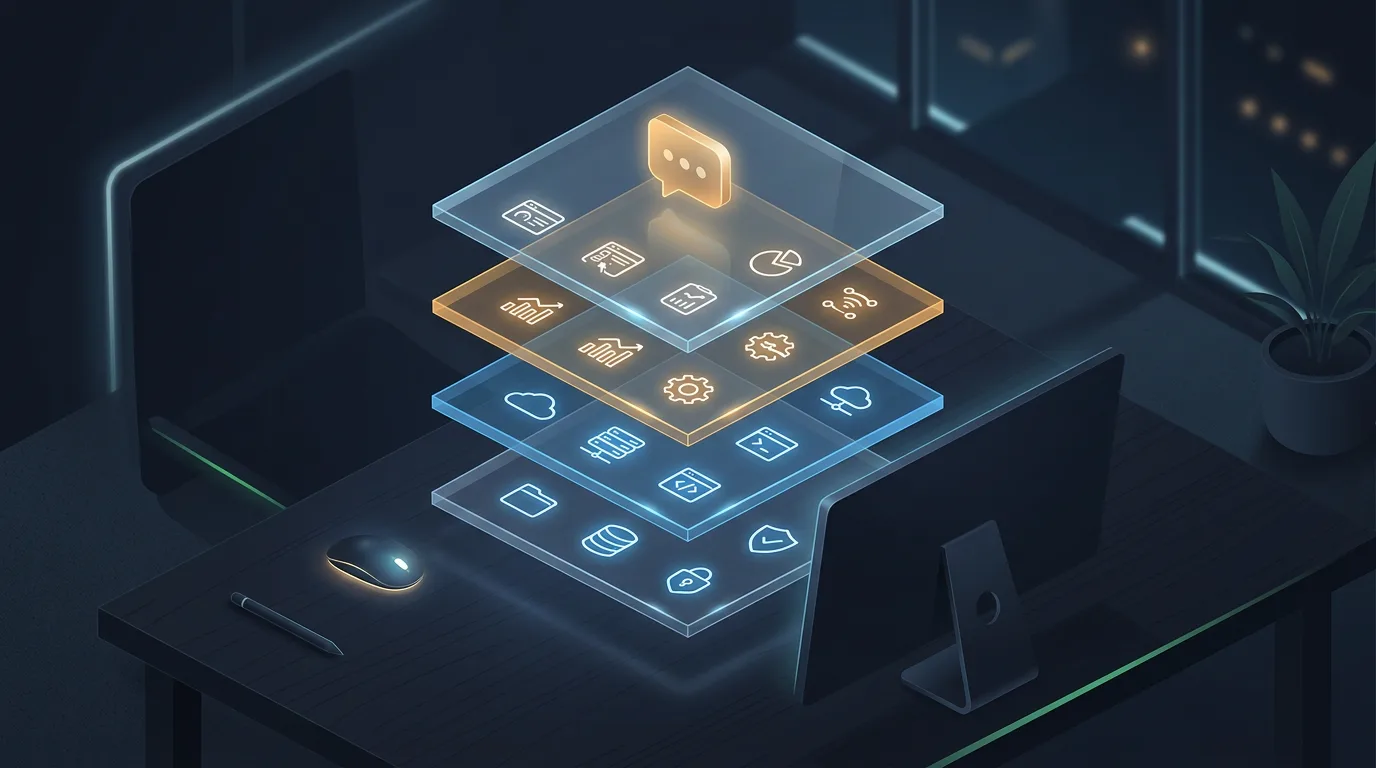
Figure: HEXOPS original illustration inspired by the topic (not a copy of the source article imagery) · Credit / further reading: openai.com
The roundup: four layers worth comparing
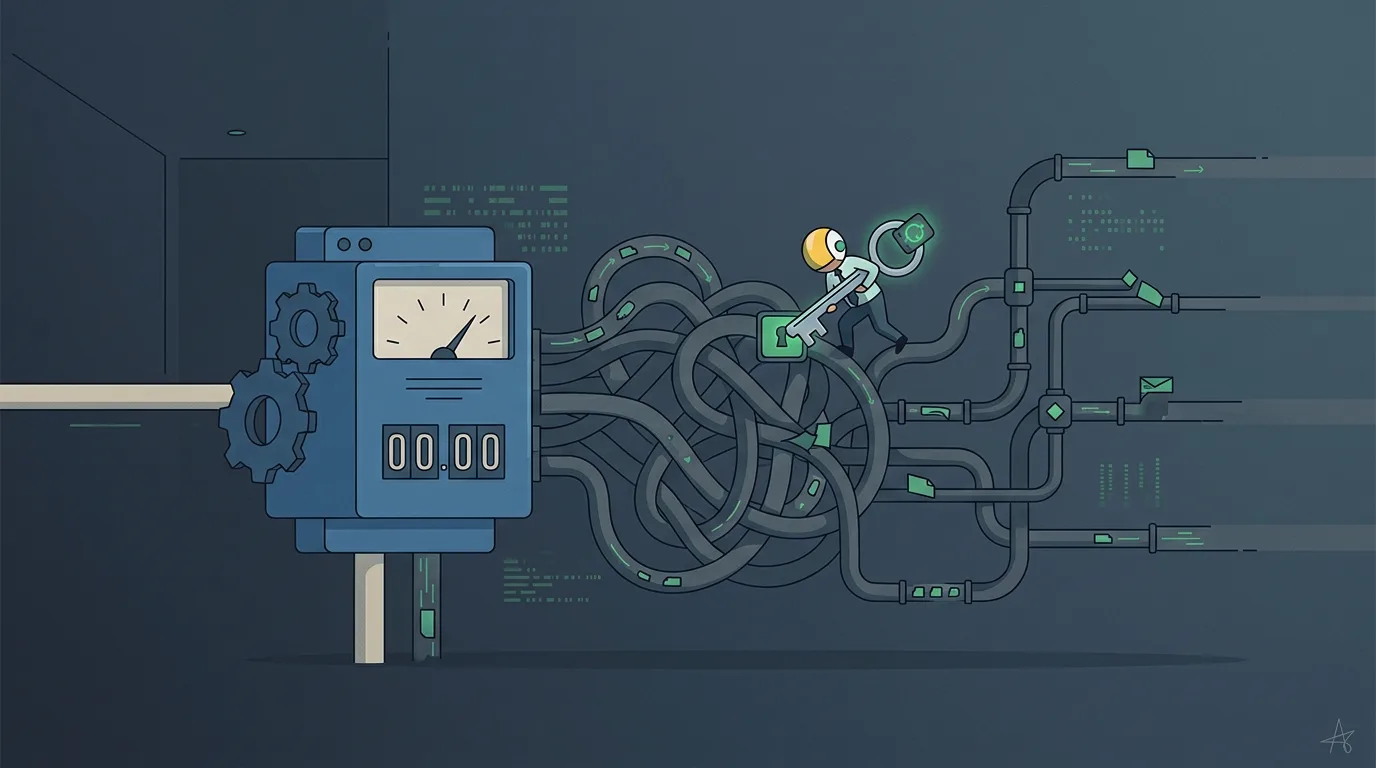
Figure: HEXOPS original illustration inspired by the topic (not a copy of the source article imagery) · Credit / further reading: openai.com
Almost every enterprise AI decision lands in one of four layers. Vendors compete across them, but procurement should treat them separately, because each has a different failure mode.
1. The assistant layer — ChatGPT apps, Copilot, Gemini, Claude
This is the surface an employee types into. Its strength is adoption: nobody needs to be taught how to ask a question. Connected apps turn the assistant into a switchboard that can reach into business systems without the user learning a second UI.
Use it when the bottleneck is human throughput — drafting, summarising, triaging tickets, reconciling a spreadsheet against a policy doc. Avoid it when the workflow requires deterministic, auditable state transitions. A chat thread is not an approval record, and an assistant that "usually" posts the right journal entry is a liability, not a tool.
2. The suite layer — Oracle Fusion, SAP, Salesforce, Workday
Every large suite vendor now ships its own agent surface and its own model partnerships. The Oracle–OpenAI arrangement is one instance of a general trend: the application vendor positions itself as the trusted broker between your data and a model provider.
Use it when your data gravity already lives in that suite and your compliance team wants a single named counterparty. Avoid it when you run a multi-suite estate and each vendor wants to be the only cockpit. You will end up with four agent consoles and no shared memory, which is worse than one honest spreadsheet.
3. The glue layer — MCP servers, iPaaS, workflow tools
The least glamorous layer and the one that decides whether the project ships. Model Context Protocol servers, integration platforms and workflow engines are how an agent discovers a tool, authenticates, and gets a scoped credential instead of a master key.
Use it when you need one agent to touch three systems, or when you must log every tool call for audit. Avoid it when a native connector already does the job — the glue layer is where latency and cost quietly accumulate, and a chain of five hops to fetch a single record is a design smell.
4. The build layer — OCI Generative AI, Azure AI Foundry, Bedrock, Vertex
If you are building something that is genuinely yours — a pricing engine, a claims triage model, an internal copilot over proprietary documents — this is where it belongs. The Oracle partnership matters here too: a lab's models arriving on a cloud you already run is mostly a procurement and data-residency win, not a capability win.
Use it when differentiation lives in your data or your evaluation set. Avoid it when you are rebuilding a commodity summariser that a $20 seat already covers.
When to use what, in one pass
| Situation | Layer to start with |
|---|---|
| Knowledge workers drowning in documents | Assistant layer, with two or three scoped connectors |
| Regulated process needing an audit trail | Glue layer first, assistant second |
| Single-suite estate, strong vendor relationship | Suite layer, negotiated hard |
| Proprietary evaluation data is the moat | Build layer |
| Multi-suite sprawl, no owner | Stop. Assign an owner before buying anything. |
When not to buy any of this
Skip the purchase if you cannot name the metric that should move. "Productivity" is not a metric; "median time to close a support ticket" is. Skip it if no one on staff can read a tool-call log, because you will be debugging blind. Skip it if your master data is a mess — agents amplify inconsistent records into confidently wrong answers, and they do it faster than humans ever could.
Also skip the enterprise tier if a pilot has not yet survived a month of real users. The upgrade path is always open; the trust you burn in a failed rollout is not.
Pricing caveats that bite later
Vendors rarely lie about price; they just describe a different unit than the one you will end up paying in.
- Seats versus consumption. Most assistant layers price per seat, then meter premium model calls or connected-app actions on top. The second meter is where budgets break.
- Per-agent versus per-action. Suite agents are often licensed by agent or by workflow, which looks cheap until you deploy one per department.
- Model routing. If the vendor chooses the model per request, you inherit their cost curve and their upgrade timing. Ask who absorbs a price change mid-term.
- Data egress and residency. The savings from consolidating onto a cloud partner can be erased by egress on the way back out. Read the exit clause before the entry clause.
- Pilot pricing is not renewal pricing. A discounted first year is a customer-acquisition cost, not a run rate. Model the third year.
Key takeaways
- The Oracle–OpenAI tie-up is a distribution story, not a capability story: models go where the data and the users already are.
- Decide the layer before the vendor. Assistant, suite, glue, build — each has a distinct failure mode.
- The glue layer is boring and decisive. If nobody owns authentication and logging, nothing ships.
- Chat surfaces are not audit records. Keep deterministic processes deterministic.
- Model the third-year cost, including egress, premium model calls, and per-agent licensing.
Next steps
- Inventory the workflows where an agent would touch a system of record, and name an owner for each.
- Run a four-week pilot in the assistant layer with no more than three scoped connectors.
- Instrument tool-call logging from day one — it is the only way to tell a model problem from a data problem.
- Before any renewal, request the consumption breakdown for connected-app actions and premium model calls.
- Re-evaluate the build layer only after the pilot produces an evaluation set worth owning.