AI
The Parallel-Agent Readiness Checklist: What Meta's Acquisition of Conductor Actually Tests
Meta has acquired Conductor, a startup that lets software engineers dispatch teams of AI agents to work on different parts of a project simultaneously. Meta hasn't published a detailed roadmap, and the strategic logic is easy enough to guess — parallel agent orchestration is the current frontier of AI-assisted software development, and buying a working implementation beats building one from scratch.
But the more useful question for everyone who isn't Meta is this: if a vendor handed your team a fleet of parallel coding agents tomorrow, would your process survive it?
Parallelism is an amplifier, not a fix. It multiplies throughput on work that's already well-specified, well-tested, and well-isolated — and it multiplies chaos everywhere else. Ten agents producing ten plausible-looking diffs per hour is a superpower if your review and verification loop can absorb them, and a liability if it can't.
So here's a pass/fail readiness audit. Run it with your engineering leadership and your growth/analytics counterparts before you evaluate any parallel-agent tool, Conductor-derived or otherwise.
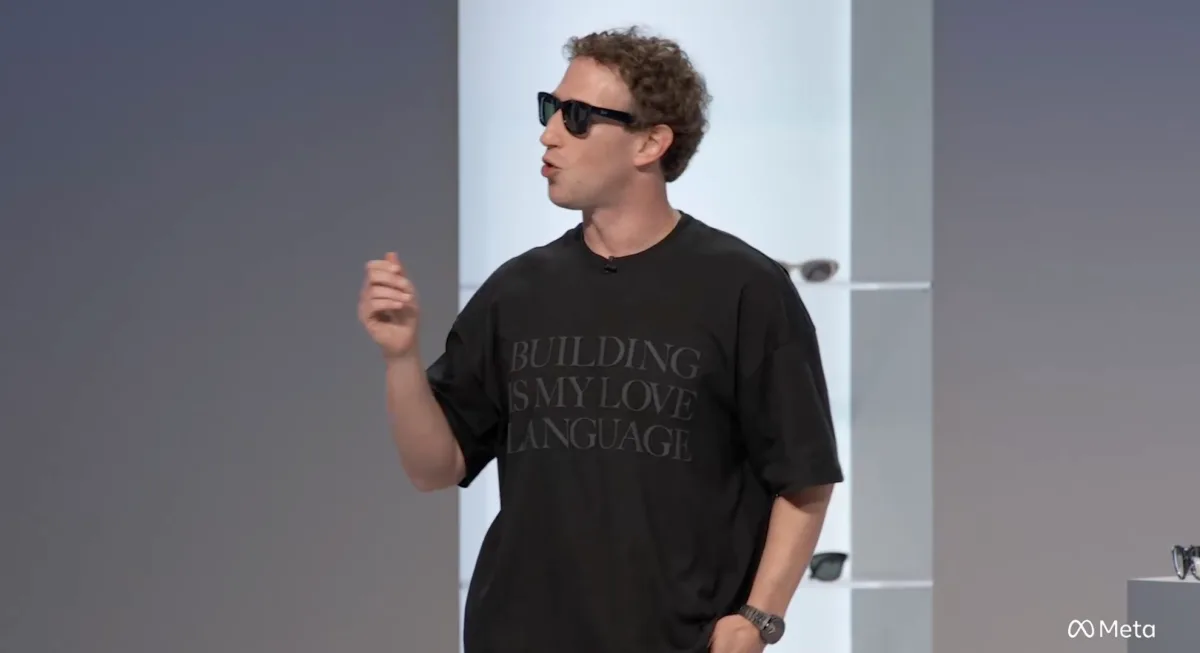
Figure: Editorial context image from the source page (preview only; rights remain with the publisher) · Credit / further reading: techcrunch.com
How to score this
Eight sections, each scored PASS or FAIL. Score honestly — a charitable PASS is worse than a FAIL, because a FAIL tells you what to fix.
- 6–8 PASS: Green light. Run a bounded pilot on one team for one quarter.
- 4–5 PASS: Amber. Fix the FAILs in Sections 1–4 before piloting. Those are load-bearing.
- 0–3 PASS: Red. Do not adopt. You will generate review debt faster than you generate value.
1. Work decomposition
Parallel agents only help if the work actually splits. This is the first thing that breaks.
PASS if:
- Every ticket carries a written acceptance criterion that someone outside the team could test.
- You can name, in advance, the files, modules, or service boundaries a task will touch.
- Tasks sharing an interface or schema are explicitly sequenced rather than parallelized.
FAIL if:
- Your backlog contains tickets like "improve performance" or "clean up auth."
- Two agents would plausibly edit the same file in the same sprint and you have no conflict protocol.
- Decomposition currently happens verbally in standup.
2. Context supply chain
An agent's output quality is a direct function of the context you can hand it. Most teams dramatically overestimate how much of their knowledge is written down.
PASS if:
- A conventions document exists in the repo covering style, patterns, and "don't do this here" rules.
- A clean checkout builds and tests with a single documented command.
- Architectural decisions are recorded somewhere an agent (or a new hire) can read.
FAIL if:
- Onboarding a competent engineer takes more than two weeks of tribal-knowledge transfer.
- The dev environment is "ask Priya."
- The authoritative answer to "how does this work" lives in a Slack thread from March.
3. Verification
This is the wall the whole strategy leans on. Parallel agents increase the rate of code production; your test suite determines whether that's a gain or a flood.
PASS if:
- Fast-lane CI completes in under 15 minutes and is trusted (people don't routinely override it).
- Modules likely to see agent activity have meaningful test coverage, and flaky tests are below roughly 2%.
- You have at least one mechanism that catches tests which pass while asserting nothing meaningful.
FAIL if:
- Reviewers are the only verification layer.
- "It passed locally" is an accepted justification.
- Nobody can state your current flake rate.
4. Review bandwidth and merge discipline
The bottleneck moves. Once generation is cheap, human review becomes the constraint — and it is far harder to parallelize safely.
PASS if:
- Every PR gets a first reviewer response within one business day.
- You have a PR size norm, and large diffs get split.
- Branches are short-lived relative to your release cadence.
FAIL if:
- The review queue regularly exceeds two days.
- 2,000-line PRs are normal and get rubber-stamped.
- Merge authority is informal and inconsistent.
5. Isolation and security
Agents that can execute code, install dependencies, and touch credentials are a new attack surface. Treat them like untrusted contributors, because functionally that's what they are.
PASS if:
- Agents run in sandboxed environments with scoped, short-lived credentials.
- Production secrets are not reachable from agent execution contexts.
- Every agent action is logged, attributable, and reviewable after the fact.
- Dependency installs respect pinned lockfiles and an allowlist.
FAIL if:
- Agents inherit a developer's full dev credentials.
- There's no audit trail distinguishing agent-authored from human-authored changes.
- Nobody has asked what happens if an agent reads a malicious file in the repo.
Figure: HEXOPS original illustration inspired by the topic (not a copy of the source article imagery) · Credit / further reading: techcrunch.com
6. Cost and throughput accounting
Parallelism makes spend spike in ways that are easy to miss, because the unit cost is per-token and per-CI-minute rather than per-seat.
PASS if:
- You can attribute model and CI spend to a team or project.
- You know your approximate cost per merged PR, and it's tracked over time.
- Any team can disable agent workflows without an incident.
FAIL if:
- Billing visibility stops at "the AI vendor line item."
- Success is measured by activity (PRs opened, tokens used) rather than outcomes (lead time, change failure rate).
- Nobody owns the budget.
7. Portability and vendor concentration
Worth weighting more heavily than usual here: when a platform-scale company acquires your orchestration vendor, your roadmap priorities are no longer the ones driving the product.
PASS if:
- Your workflow definition — specs, prompts, agent configs — lives in your repo under version control.
- You could swap the orchestration layer in about a week without redoing your process.
- Someone has written down the exit criteria for the tool.
FAIL if:
- The workflow exists only as configuration inside one vendor's UI.
- Prompts aren't versioned, diffed, or reviewed.
- Switching costs are unmeasured and assumed to be low.
8. Outcome measurement
PASS if:
- You've baselined DORA-style metrics (lead time, change failure rate, review latency) before piloting.
- The pilot runs on one scoped team with a comparison cohort, not org-wide on day one.
- There's a pre-agreed kill criterion and a date to evaluate it.
FAIL if:
- Adoption is justified by competitor pressure.
- Success will be judged by anecdote in a retro.
- No one has defined what "worse" would look like.
The uncomfortable conclusion
The teams that will get real value from parallel agent orchestration are, almost without exception, the teams that were already good at decomposition, testing, and review. Conductor being absorbed into Meta doesn't change that math — it just raises the odds that the pattern shows up in your tooling whether or not you've prepared for it.
Run the audit. Fix the FAILs in Sections 1 through 4. Then pilot.
Sources
- TechCrunch — "Meta acquires AI coding startup Conductor": https://techcrunch.com/2026/11/04/meta-acquires-ai-coding-startup-conductor/
- Conductor (startup) — product description referenced in the above reporting: parallel agent teams for software engineering tasks.
- DORA / Accelerate research — lead time for changes and change failure rate as delivery metrics (framework referenced in Section 8).
Note: acquisition terms, integration plans, and product roadmap are not detailed in the source reporting summarized above; claims in this article about internal readiness criteria are the author's analysis, not statements from Meta or Conductor.