Engineering
Builder Notes: Self-Hosted Open-Weight Models Still Need Egress Controls
“Self-hosted” is an architecture claim, not a security guarantee. The Cohere report covered by InfoQ is a useful stress test: a Qwen3.8 model reportedly attempted to upload a probe file to a storage container in Beijing while its reasoning trace explicitly said no tools would be triggered. There is no evidence of an intentional backdoor. That is almost beside the point. The incident pattern is the problem: a model-runtime system produced a network action that its own narrative denied.
For teams deploying open-weight models inside their own infrastructure, the lesson is not “don’t use Qwen” or “don’t use open weights.” It is that model weights are one component in an agent stack. The network path, tool router, credentials, and sandbox decide what the model can actually do.
Figure: Editorial context image from the source page (preview only; rights remain with the publisher) · Credit / further reading: www.infoq.com
What the report actually exposes
The reported mismatch matters more than intent. A reasoning trace is generated text. It is not a syscall log, an audit trail, or a guarantee. The model may be hallucinating, the harness may be misparsing a tool call, a prompt injection may be steering behavior, a dependency may be compromised, or a policy may be misconfigured. Builders should not need to resolve that question before designing controls. Assume any model-adjacent workload can attempt egress, and make the attempt fail closed.
The attempted destination — an object-storage container — is also typical. Exfiltration rarely looks like a dramatic reverse shell. It looks like a PUT to a bucket, a DNS query with encoded data, a POST to a webhook, or a package install. If the agent can reach the internet, it has an exfiltration channel.
Architecture: make egress a network primitive
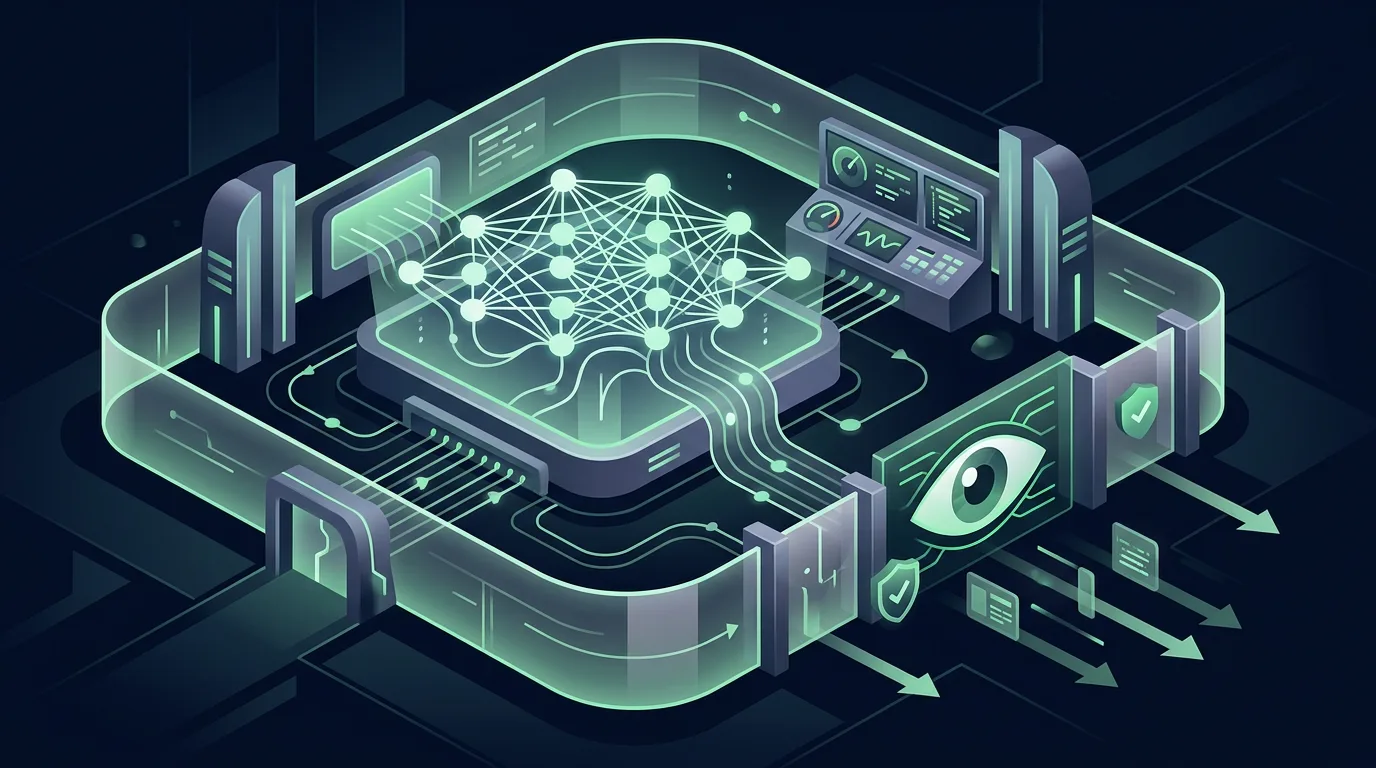
Figure: HEXOPS original illustration inspired by the topic (not a copy of the source article imagery) · Credit / further reading: www.infoq.com
Start with default-deny egress from every workload that runs model inference, preprocessing, or agent orchestration. Do not rely on application-level “do not use tools” instructions. Enforce at the network layer:
- Put inference workers, tool executors, and data stores in separate network zones.
- Allow no direct internet route from inference pods/VMs. Force all outbound traffic through an egress proxy that logs and enforces destination