Comparison
How to Play Anthropic's Nasdaq Debut: A Selection Guide for Every Investor Profile
Anthropic opened its first day of Nasdaq trading at roughly $111 per share, about 33% above the $83 IPO price that underwriters set the night before. The offering raised more than $80 billion in new capital — a figure that puts the listing in a category of its own and reframes the question from "is AI a real market?" to "how should I own it?"
For anyone who has watched the company from the outside — as a customer, a developer, or simply a spectator — the debut creates a decision point. There is now a liquid, publicly priced instrument tied to one of the most consequential private companies of the decade. But "buy ANTH" is only one of several ways to express a view, and it is not the right one for every portfolio. This guide lays out the realistic options, the criteria that separate them, and which choice fits which scenario.
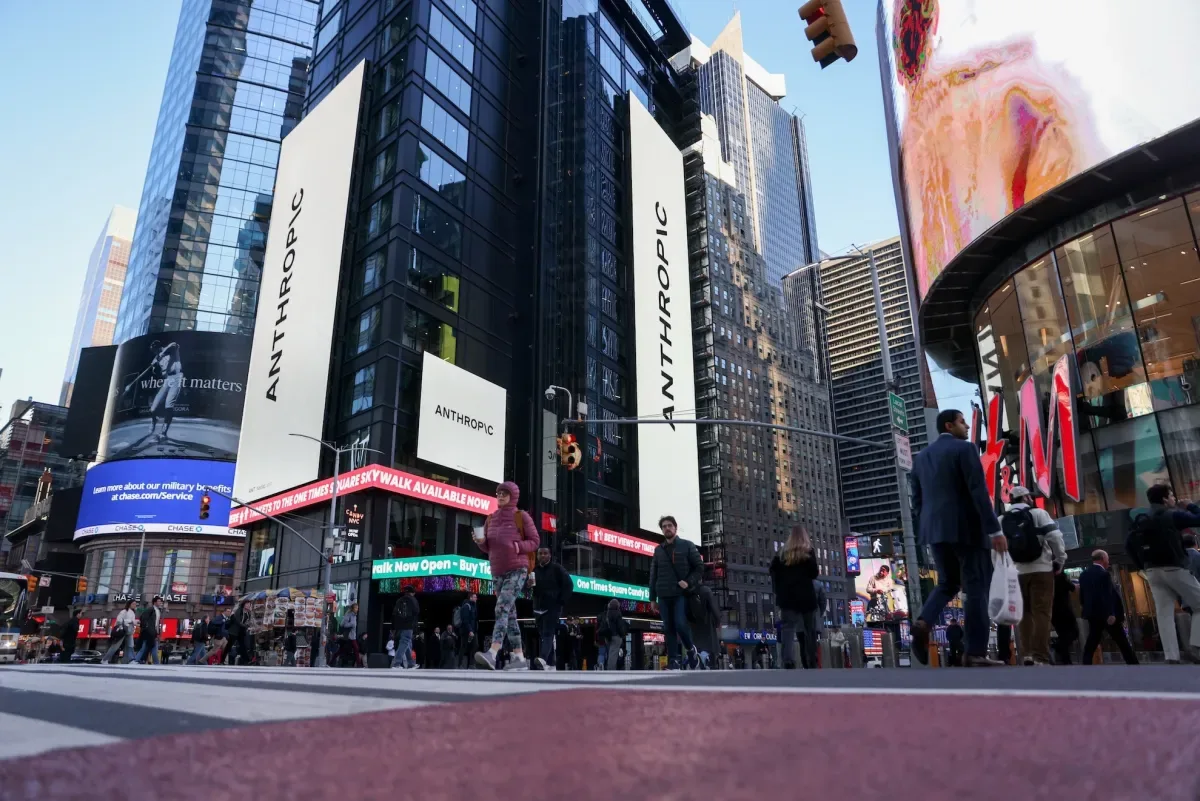
Figure: Editorial context image from the source page (preview only; rights remain with the publisher) · Credit / further reading: techcrunch.com
What the first trade actually tells you
A 33% first-day premium is meaningful but not unusual for a high-profile listing — it mostly reflects the gap between the price institutions were willing to underwrite and the price the secondary market was willing to pay. Two things follow.
First, the $80 billion+ raise means the company entered the public markets with an unusually deep cash position. That reduces near-term dilution risk and gives management room on compute contracts and infrastructure buildout, which is the single largest line item for any frontier model lab.
Second, the pop creates a visible anchor effect. Buyers at $111 are competing with a large cohort that paid $83. That cohort is, in most cases, locked up for a defined period. When the lockup expires, supply arrives on a schedule that has nothing to do with the company's fundamentals. Any entry plan should account for this.
The options
1. Buy shares at market (ANTH). The direct route. Full upside, full concentration, full daily volatility. The cost is the 33% premium the first-day crowd already paid.
2. Staged entry after the initial price discovery. Split an intended allocation into three or four tranches across the first one to two quarters, with at least one tranche reserved for after the first lockup expiry. This sacrifices some upside if the stock runs but materially dampens the risk of buying a euphoria peak.
3. AI-themed ETF or managed basket exposure. Own Anthropic as a component rather than a position. Typically 3–10% of a concentrated AI fund, lower for broad technology indices. You get the thematic tailwind with a cap on single-name damage.
4. Options overlay (once a listed chain develops). Covered calls against a share position to monetise elevated post-IPO implied volatility, or protective puts if you intend to hold through the lockup window. Requires an options-capable broker and comfort with expiry risk.
5. Adjacent exposure. Hyperscalers, compute and networking suppliers, and power/utility names tied to data-centre demand. Lower idiosyncratic risk, but far weaker linkage — these are AI exposure, not Anthropic exposure.
6. Wait in cash or short-duration instruments. A legitimate position. Newly listed high-growth names have historically offered better entries after the first earnings report than on day one.
Criteria table
| Option | Upfront capital | Liquidity | Concentration risk | Upside capture | Complexity | Best for |
|---|---|---|---|---|---|---|
| Direct shares, day one | Full position | High | Very high | Full | Low | High-conviction, long-horizon buyers |
| Staged/tranched entry | Full, spread over time | High | High | Near-full | Low | Most retail and advisor-led accounts |
| AI ETF / basket | Any size | High | Moderate | Partial | Low | Diversification-first allocators |
| Options overlay | Position + margin | Medium–high | High | Capped/modified | High | Experienced holders, income seekers |
| Adjacent exposure | Any size | High | Low–moderate | Weak | Low | Risk-averse thematic investors |
| Cash and wait | Any size | Highest | None | None initially | Low | Valuation-sensitive or uncertain buyers |
The table's real message: the trade-off is almost entirely between upside capture and concentration risk, with complexity as the tiebreaker. Every option sits somewhere on that line.
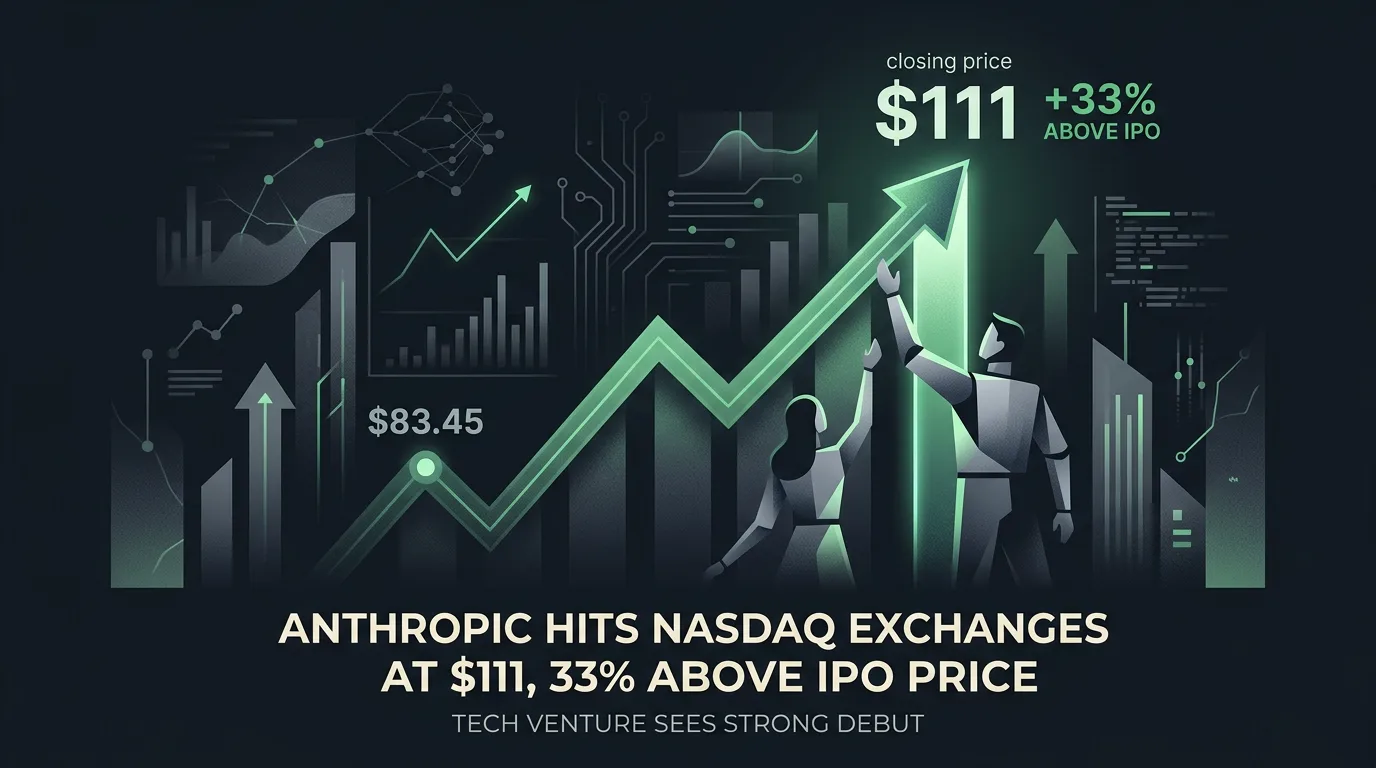
Figure: HEXOPS original illustration inspired by the topic (not a copy of the source article imagery) · Credit / further reading: techcrunch.com
Recommendation by scenario
You are a long-term believer with a five-year horizon and a 1–3% single-name limit. Buy direct, but in tranches. Put roughly half to work now, a quarter after the first post-IPO earnings report, and hold a quarter back for the lockup window. Size the position so a 50% drawdown is survivable without forced selling. At $111 you are paying for execution, not for the $83 underwriting discount.
You want AI exposure without single-name blowup risk. Use an AI-focused ETF or a self-managed basket of five to eight names, with Anthropic capped at a meaningful but non-dominant weight. You will give up a portion of any Anthropic-specific upside in exchange for materially lower path dependency.
You think the 33% pop overshot and want to be patient. Do nothing for now. Set a price or event trigger — the first quarterly report, the first lockup expiry, or a defined drawdown from the debut high — and buy only if it fires. The cost of this approach is the possibility of never owning it; that is an acceptable cost for a valuation-driven process.
You already hold shares and want income or protection. Once a listed options chain exists with reasonable open interest, a covered-call programme against part of the position can monetise post-IPO volatility. If you cannot stomach the lockup window, a protective put is cheaper than selling and re-entering.
You are an institution building a position. Start with an index-inclusion and liquidity analysis before the fundamental one. Large listings get added to indices on a schedule, and that flow is often a better near-term driver than quarterly results. Use dark-pool and VWAP execution to avoid moving a thin early book.
You are a momentum trader. This is explicitly not a hold. The first 30–60 trading days will be dominated by supply dynamics, analyst initiation notes, and index events. Define a stop before entry and treat the position as a trade, not an investment.
You are risk-averse or near retirement. Adjacent exposure — infrastructure and power names tied to AI capex — or no exposure at all. A single newly public, high-volatility name has no place in a capital-preservation portfolio regardless of the narrative.
What to watch
Four variables will matter more than the debut price: the first lockup expiry calendar, gross margin trajectory as compute costs are expensed, enterprise revenue concentration among the top customers, and the competitive response from both incumbent labs and hyperscalers building in-house. Any of these can reprice the stock faster than the business changes.
Bottom line
The $111 debut is a pricing event, not an investment thesis. The right selection depends on how much concentration you can survive, not on how compelling the story is. For most individuals, a tranched direct position inside a strict single-name cap, or a basket with Anthropic as one component, beats both a day-one lump sum and indefinite sidelines. The $83 to $111 gap is already someone else's return — your job is to decide what you are paying for next.
This article is analysis, not investment advice. Figures are as reported at the time of listing and may change with subsequent filings.
Sources
- TechCrunch — "Anthropic hits Nasdaq exchanges at $111, 33% above IPO price": https://techcrunch.com/2026/11/19/anthropic-hits-nasdaq-exchanges-at-110-27-above-ipo-price/
- Reported IPO pricing details ($83 per share; more than $80 billion in new capital raised) as summarised in the source above.