AI
Why open source is the pressure point
Most production systems run on code nobody on the team wrote. That asymmetry is exactly what makes AI-based bug-finding attractive: a model can read a large dependency faster than any reviewer, propose suspicious paths, and hand you a short list to verify. But the same asymmetry makes it dangerous. A tool that flags 200 candidates across your transitive dependency tree and gets 12 right has not saved anyone time — it has transferred the cost of judgment onto already-busy engineers.
The signal that matters here is not "AI finds bugs." Any fuzzer finds bugs. The signal is whether an AI-assisted workflow can be made accountable: reproducible, gated, and safe to run against code you don't own. Treat the checklist below as a set of pass/fail gates, not a shopping list. A team that fails the early gates should not proceed to the later ones.

Figure: Editorial context image from the source page (preview only; rights remain with the publisher) · Credit / further reading: www.haproxy.com
Gate 1 — Scope: do you know what you're scanning?
Before pointing a model at anything, write down the boundary.
- PASS if you can name the exact repositories, commit SHAs, and license obligations in scope, and you know which ones your organization already patches privately.
- FAIL if the scope is "all our dependencies" or "whatever the tool pulls."
AI tools often operate on code with copyleft licenses or with security-sensitive embargo status. Scanning is usually fine; publishing what you found is not. Decide upfront whether findings stay internal.
Gate 2 — Environment: is the tool sandboxed?
- PASS if analysis runs in an isolated environment with no outbound network access by default, no production credentials, and no ability to execute arbitrary dependency code.
- FAIL if the tool needs your live CI token, your package registry credentials, or a writable path into a build artifact store to "do its job."
Model-driven analysis frequently involves executing or simulating code paths. If the runtime can reach the network, you have created a new supply-chain exposure inside the very process meant to reduce it.
Gate 3 — Reproducibility: can a second engineer confirm it?
The single most common failure mode of AI bug reports is that they are not reproducible.
- PASS if every reported finding arrives with a minimal reproduction, the exact code version, and the model or tool version that produced it.
- FAIL if the finding is a paragraph of prose pointing at a function and asserting a problem.
Set a hard rule: no reproduction, no ticket. Findings that cannot be reproduced are logged but never assigned. This alone will kill a large share of your queue, which is the point.
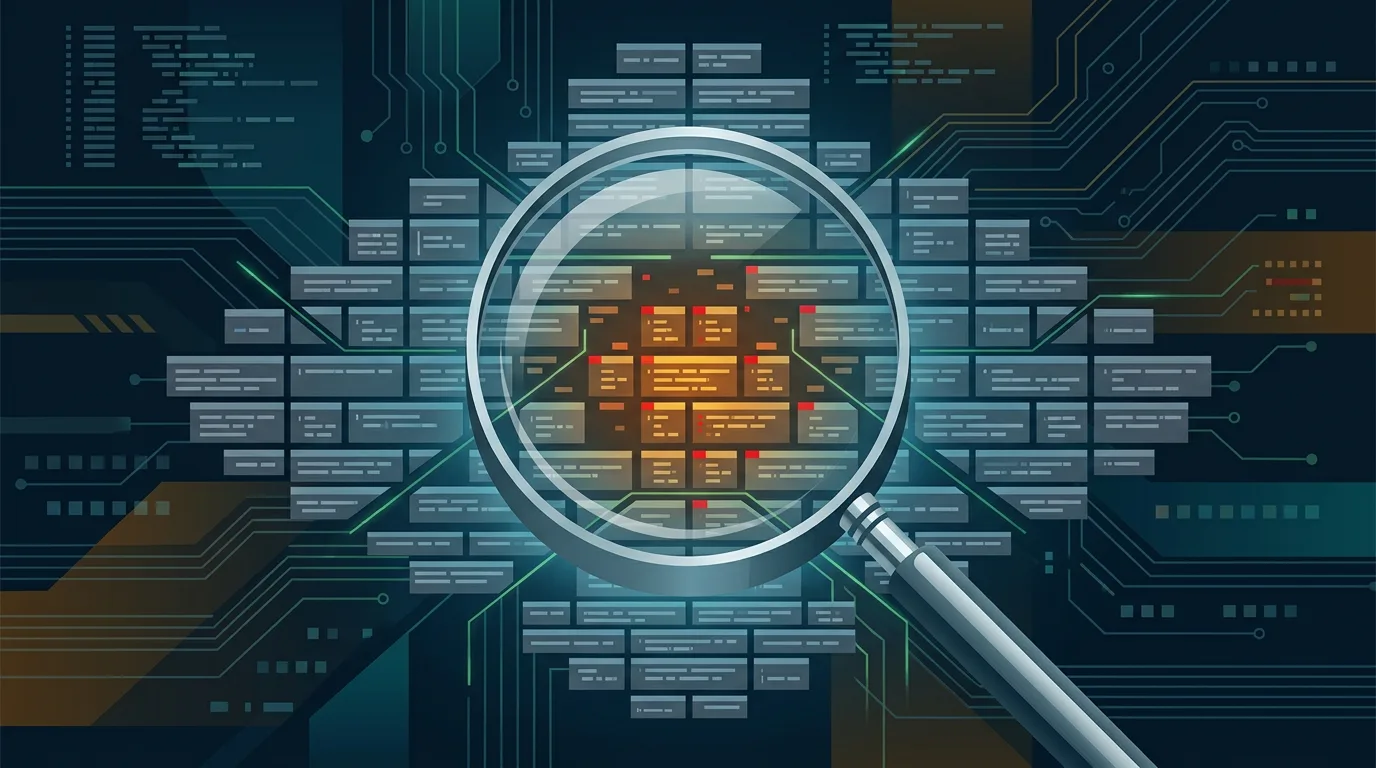
Figure: HEXOPS original illustration inspired by the topic (not a copy of the source article imagery) · Credit / further reading: www.haproxy.com
Gate 4 — Triage: is the false-positive rate measured?
You cannot manage what you do not count.
- PASS if, after a two-week pilot, you can state the confirmed-bug rate as a number and compare it to your existing static analysis or fuzzing baselines.
- FAIL if the team cannot say whether the tool is better or worse than what they already run.
Run the pilot on a module with known historical bugs. If the tool cannot rediscover defects that were already fixed and documented, it will not reliably find new ones.
Triage checklist for each finding
- Is the affected version actually deployed anywhere in your fleet?
- Is the input path reachable from an untrusted source?
- Does the finding survive contact with the maintainer's threat model (some are explicitly out of scope)?
- Is there a cheaper mitigation — pinning, config, WAF rule — than a code change?
- Who owns the decision, and by when?
Gate 5 — Upstreaming: are you a good citizen?
You are scanning someone else's unpaid labor. This is where teams most often damage themselves.
- PASS if reports include a reproduction, a suggested patch or precise pointer, disclosure that AI tooling assisted the analysis, and respect for the project's stated security policy and embargo window.
- FAIL if you open public issues for security bugs, dump model output verbatim into a tracker, or ask maintainers to "investigate" without evidence.
Three more rules worth writing down:
- Do not batch-dump. Ten low-quality issues from one reporter reads as spam and gets you ignored.
- Do not imply endorsement. Never phrase a report as "an AI found this, so it must be real."
- Always offer to help. In small projects, a pull request with tests beats a bug report every time.
Gate 6 — Fix velocity: can you actually close what you open?
- PASS if your team has committed capacity (even one engineer-day per week) to verify and close findings before the next scan runs.
- FAIL if the backlog of unverified findings grows between scans.
A growing backlog is the clearest sign that the tool is producing work rather than removing it. If you cannot close, turn the scanning down or off. Coverage you cannot act on is theater.
Gate 7 — Governance: who is allowed to act on a finding?
- PASS if there is a named owner for the workflow, a documented policy for what may be disclosed externally, and an audit trail of model-assisted findings that led to code changes.
- FAIL if findings live only in a chat channel or a personal notebook.
This matters beyond hygiene. Model-assisted findings increasingly show up in audits and incident reviews, and a team that cannot say which changes were AI-suggested and how they were verified is in a weak position.
Gate 8 — Exit criteria: when do you stop?
- PASS if your pilot has a defined end date and a written decision rule — expand, keep as-is, or drop.
- FAIL if the tool is adopted by default because nobody scheduled the review.
Good decision rules look like: confirmed-bug rate above the static-analysis baseline; median time-to-verify under one hour per finding; no maintainer complaints during the pilot; at least one fix merged upstream. If any of these miss, drop it and revisit in two quarters.
Key takeaways
- AI bug-finding is a triage amplifier, not an oracle. Value comes from the gated workflow around it, not the model.
- The binding constraint is almost never detection — it is verification capacity and maintainer trust.
- Four hard rules carry most of the weight: no reproduction means no ticket, no public issues for security bugs, no verbatim model output in trackers, no unmeasured pilots.
- Measure the confirmed-bug rate against your existing baselines, or you are guessing.
- Upstream conduct is a long-term engineering asset. Spend it carefully.
Next steps
- Pick one dependency you already patch privately and run a two-week scoped pilot there.
- Write the four hard rules into your contribution policy before the first finding is filed.
- Name an owner and a review date; put it on the calendar now.
- After two weeks, compute confirmed-bug rate and median time-to-verify, then apply your written decision rule.