AI safety
Anthropic's Claude Code Review Playbook: A Tool/Stack Roundup for AI-Assisted Reviews
Anthropic has outlined how its Claude Code team reviews code as AI agents contribute more to the codebase. According to InfoQ's summary, the process is not a single “AI reviewer” but a layered pipeline: automated verification, AI-powered review, and risk-based human approval. The goal is familiar to every engineering leader: cut manual review time without increasing regressions or production incidents.
That framing is more useful than any vendor demo. It suggests the right question is not “Which AI code review tool should we buy?” but “Which layers belong in our review stack, and where does each one stop?” Below is a practical roundup of tools and stack patterns inspired by Anthropic's approach, including when to use them, when not to, and the pricing traps to check before rollout.
Figure: Editorial context image from the source page (preview only; rights remain with the publisher) · Credit / further reading: www.infoq.com
The core lesson: review is a pipeline, not a chatbot
Anthropic's approach points to three layers that should stay separate:
- Deterministic verification first. Tests, linters, type checks, secret scanning, dependency checks, and static analysis should run before any model sees the diff. They are cheaper, reproducible, and easier to audit.
- AI review second. AI reviewers are best at summarization, missing-edge-case detection, consistency checks, and explaining risk. They are weaker as final authorities on architecture, security policy, and product intent.
- Risk-based human approval third. Low-risk changes can move quickly after automated checks. High-risk paths—authentication, payments, infrastructure, data migrations, public APIs—should require named human owners.
This is the pattern to copy. It is also the pattern that fails when teams bolt an AI reviewer onto a repo with no tests and no ownership rules. AI review amplifies good engineering signals; it does not replace them.
Stack roundup at a glance
| Tool / layer | Best for | Avoid when | Pricing caveat |
|---|---|---|---|
| Claude Code review agents | Teams already using Claude Code; custom multi-step review prompts; repo-wide context | No CI guardrails; strict deterministic audit requirements | Token usage scales with diff size and re-runs; subscription and API costs can diverge |
| GitHub Copilot code review | GitHub-native teams wanting low-friction PR comments | Non-GitHub stacks; deep custom policy engines | Per-seat pricing; AI credits or enterprise tiers may apply |
| CodeRabbit | PR summaries, line-level comments, configurable review rules | You need deep architectural or security sign-off from AI alone | Usually per active developer; free OSS tiers may exclude private repos |
| Greptile | Codebase-aware review with custom rules and fewer shallow comments | Tiny repos; teams unwilling to index source code | Per-seat and enterprise pricing; confirm indexing and retention terms |
| Qodo Merge | Customizable, self-hosted-friendly review workflows; open-source core | Teams wanting zero setup | Open-source + cloud tiers; LLM token costs and maintenance are on you |
| Graphite Diamond | Stacked PR workflows and faster review routing | Non-GitHub environments; very small teams | Per-seat plus AI add-on pricing; check whether AI is bundled |
| Cursor Bugbot | Catching bugs in AI-generated PRs | Full compliance or architecture review | Per-seat plus usage-based model costs; review volume matters |
| Semgrep / SonarQube / Codacy | Deterministic policy gates, SAST, code quality | Semantic design review | LOC-, contributor-, or project-based licensing; self-hosting adds ops cost |
Where each layer fits
Claude Code review agents
Use when your team already uses Claude Code and wants custom review passes: “check migration safety,” “find missing tests,” “compare against service conventions.” Anthropic's layered model works best when the agent is one step in a pipeline, not the final gate.
Avoid when you have no reliable test suite or when auditors require fully deterministic review records. Also avoid letting an agent review enormous diffs without truncation or caching.
Pricing caveat: Claude Code costs can come through subscription plans or API usage, and review automation consumes tokens on every push. Large monorepos, repeated reviews, and multi-agent loops can turn a cheap pilot into a noticeable bill. Cap diff size, cache repo context, and run deterministic checks first.
GitHub Copilot code review
Use when your workflow is already GitHub-centric and you want fast, low-friction PR comments. It is a sensible first AI layer for teams that want minimal procurement and admin overhead.
Avoid when you need deep cross-repo context, custom risk policies, or non-GitHub support. Treat its comments as suggestions, not approvals.
Pricing caveat: per-seat licensing is simple until you roll it out to everyone. AI credits, enterprise controls, and add-ons can change the effective price. Pilot with active reviewers, not the entire directory.
CodeRabbit
Use when you want strong PR summaries, line-level comments, and configurable review behavior without building your own agent. It is useful for high PR volume and distributed teams.
Avoid when you expect AI to replace senior review on security-critical code. False positives can add noise if rules are not tuned.
Pricing caveat: per-developer pricing often counts active contributors, not just daily users. Free open-source tiers are useful but may not cover private repositories. Check enterprise/self-hosted pricing separately.
Greptile
Use when codebase context matters—review comments that understand service boundaries, conventions, and prior patterns. Custom rules can encode team standards.
Avoid when the repo is small enough that context is obvious, or when indexing source code creates policy concerns.
Pricing caveat: per-seat and enterprise plans are common; confirm data retention, indexing scope, and whether bot accounts or contractors count as seats.
Qodo Merge
Use when you want a customizable review workflow, open-source flexibility, or self-hosted options. It fits teams that want to own prompts, rules, and integrations.
Avoid when you want a fully managed, zero-maintenance tool. Self-hosting shifts cost to platform engineering.
Pricing caveat: open-source core plus paid cloud/enterprise tiers is attractive, but LLM API costs and maintenance time are real. Budget for both.
Graphite Diamond
Use when stacked PRs and review routing are the bottleneck. It is less about replacing reviewers and more about making review flow faster.
Avoid when you are not on GitHub or your team is too small to benefit from stacked-diff workflow.
Pricing caveat: per-seat pricing plus AI features can be bundled or separate. Confirm whether AI review is included or an add-on.
Cursor Bugbot
Use when AI-generated PRs are common and you want another bug-focused pass. It is a useful complement to human review, especially for logic errors.
Avoid when you need a full review platform with policy enforcement and audit trails.
Pricing caveat: per-seat plus usage-based model costs can scale with PR volume. Set review triggers carefully so bots do not review every trivial commit.
Deterministic layer: Semgrep, SonarQube, Codacy
Use when you need repeatable policy gates: SAST, secrets, dependency risk, coverage thresholds, code quality. This layer should run before AI review.
Avoid when you expect it to understand product intent or architectural trade-offs. It cannot.
Pricing caveat: licensing often scales by lines of code, contributors, or projects. Self-hosting reduces subscription cost but adds operations overhead.
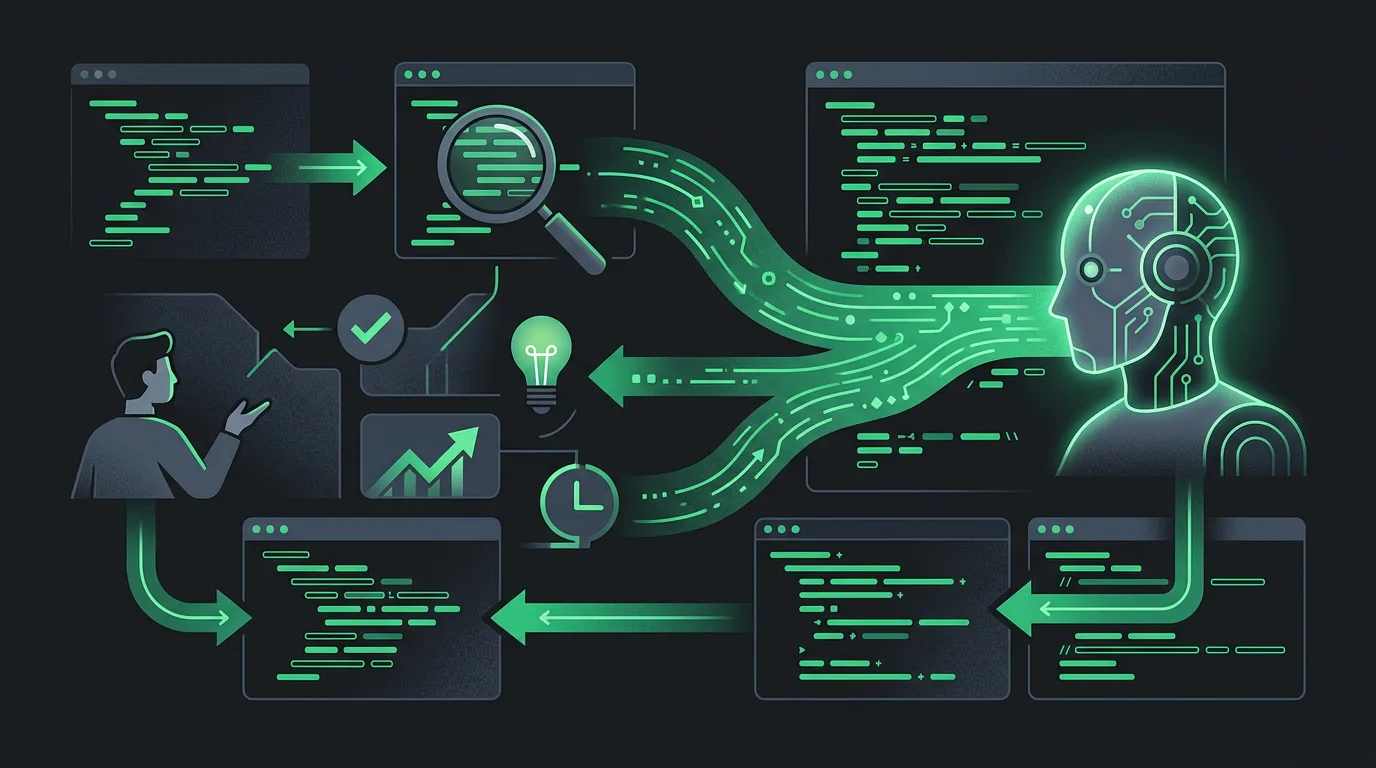
Figure: HEXOPS original illustration inspired by the topic (not a copy of the source article imagery) · Credit / further reading: www.infoq.com
Pricing caveats that decide ROI
AI review pricing is full of quiet multipliers. Watch for per-seat vs. per-active-contributor definitions, AI credits sold separately from seats, per-review charges on large PRs, and token-based costs that spike with diff size and re-runs. Free tiers are often limited to public repos or small teams. Enterprise controls—SSO, audit logs, self-hosting, data retention—are usually upsells.
The hidden costs are CI minutes, developer time spent triaging false positives, and the risk of treating AI comments as approvals. A cheap tool that adds 20 noisy comments per PR is expensive. A more costly tool that routes high-risk changes correctly may pay for itself.
The practical recommendation
Copy Anthropic's shape, not just its tooling: deterministic checks first, AI review second, risk-based human approval last. Start with one repo, measure review time and escaped defects, and tune routing by path. Use AI reviewers for summarization and edge cases; keep humans accountable for auth, payments, infrastructure, and data changes.
The winning stack is usually boring: strong CI, a codebase-aware AI reviewer, and a clear rule that high-risk code never auto-merges. That is how AI review reduces toil without becoming a new source of incidents.
Sources
- InfoQ: “Anthropic Outlines its AI-Powered Code Review Process for Claude Code” — https://www.infoq.com/news/2026/11/claude-code-review/?utm_campaign=infoq_content&utm_source=infoq&utm_medium=feed&utm_term=global
- Vendor pricing and feature details referenced above are based on commonly published plans and should be verified against current vendor documentation before purchase.