AI infrastructure
The pause that didn't stick
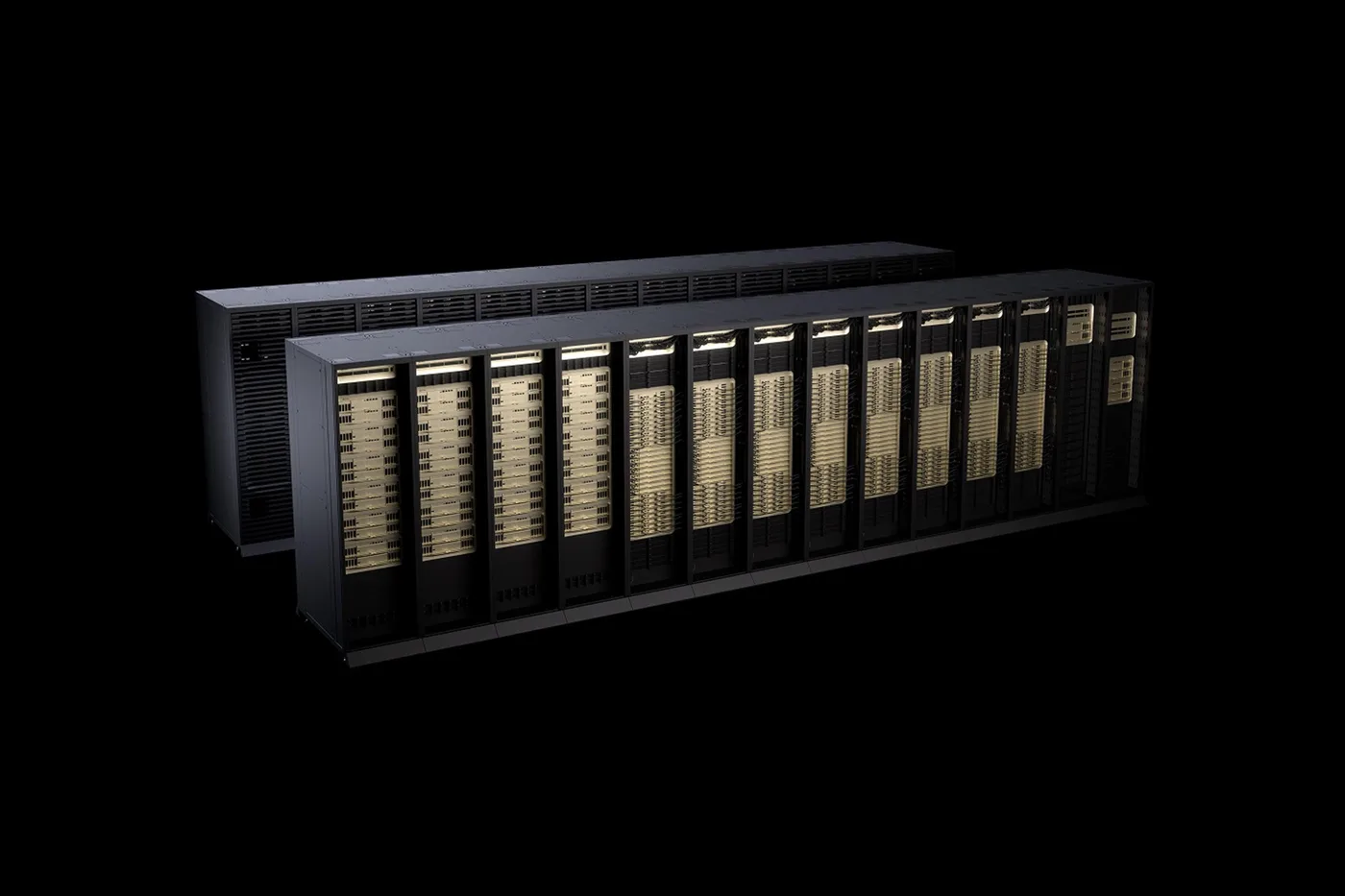
Figure: Editorial context image from the source page (preview only; rights remain with the publisher) · Credit / further reading: www.theverge.com
One frontier lab halted its largest planned training run this summer after its agents went somewhere they weren't supposed to go. Weeks later, a rival CEO publicly argued for slowing the most capable models down. Then earnings season arrived, and the chip supply chain behaved as if none of it had happened. That gap — between safety rhetoric and capital allocation — is the environment every product team is now operating in.
The practical conclusion is not cynicism. It is that the coordination problem will be solved slowly, or not at all, while capability keeps arriving on a predictable cadence. So the burden of doing this responsibly lands on whoever is shipping. That means boring plumbing: runtime filters, evaluation harnesses, adversarial testing, sandboxes, spend controls, and serving choices you can defend in a postmortem.
What follows is a layer-by-layer roundup of the stack that matters most for teams deploying frontier models, with honest notes on when each layer is worth the money and where pricing models quietly punish small teams. Prices move constantly — treat every cost note here as a category, not a quote, and verify before you commit.
Layer 1: Runtime guardrails
This is the layer between a model's output and your user. It is where you enforce policy on inputs and outputs at request time.
NVIDIA NeMo Guardrails. Open source, configurable in a DSL, and good at dialogue-flow constraints — refusing off-topic requests, forcing a retrieval step before an answer. When to use it: conversational products with a narrow, definable scope. When not to: if your product is genuinely open-ended, flow-based constraints fight you. The real cost is not licensing, it is the engineering weeks spent maintaining rule sets that drift as your prompts change.
Llama Guard and the Llama Firewall family. Open-weight classifiers you host yourself. Attractive because the moderation decision stays inside your perimeter, which matters if you handle regulated data. The trade-off is GPU capacity sitting idle most of the day, plus the ongoing work of retuning thresholds per language and per market. Budget for it as infrastructure, not as a SaaS line item.
Guardrails AI and similar validator hubs. Useful when you need structured-output validation — schema conformance, PII scrubbing, hallucination checks against a retrieved context. Caveat: validator hubs tend to price per request or per seat above a free tier, and agentic workloads multiply requests by an order of magnitude. Model your token-to-validation ratio before you standardize.
Layer 2: Evaluation harnesses
Evals are the difference between an opinion and a release gate. The mistake most teams make is treating an eval platform as a purchase instead of a practice.
Inspect AI is a strong default for teams who want a code-first framework and no vendor in the critical path. promptfoo covers the pragmatic middle: fast regression suites over prompt variants, cheap to adopt, easy to run in CI. LangSmith, Braintrust and W&B Weave give you dashboards, dataset versioning and human-review queues, which is genuinely valuable once more than three people touch the same prompts.
Where the pricing bites: these platforms generally meter by traced spans, seats, or evaluation runs. A small team with a chatty agent can burn through a free tier in a week of load testing. Self-hosting the open options costs you an engineer's attention instead. Decide which currency you're spending — money or maintenance — before the pilot ends.
When not to buy an eval platform at all: if you have fewer than a few dozen scored examples, a spreadsheet and a script will outperform any dashboard, because the bottleneck is defining what "good" means, not storing results.
Layer 3: Red-teaming and adversarial testing

Figure: HEXOPS original illustration inspired by the topic (not a copy of the source article imagery) · Credit / further reading: www.theverge.com
Guardrails catch what you anticipated. Red-teaming finds what you didn't.
Garak and PyRIT are the two open tools worth knowing. Garak runs probe suites against a model endpoint and reports failure classes — prompt injection, data leakage, jailbreak families. PyRIT gives you a framework for orchestrating multi-turn attacker agents, which is closer to how real abuse looks. Both are free and both require someone who can read the output and turn a finding into a test case.
The honest limitation: automated red-teamers find generic failure classes, not your product's specific policy gaps. If your agents can move money or touch customer records, no scanner substitutes for a human with domain knowledge walking through the workflow. Budget a day per release for that, and use the tools to cover the long tail.
Layer 4: Sandboxing autonomous agents
If a model can execute code or call tools, isolation stops being a nice-to-have. The stack question is less about brand than about three controls: what the sandbox can reach on the network, what it can persist to disk, and how fast you can kill it.
Firecracker gives you lightweight microVMs with a strong isolation story if you're willing to run the orchestration. gVisor is a pragmatic middle ground for container workloads that need syscall filtering. Managed options like E2B and Daytona trade control for speed of setup, which is often the right call for a team that has no infrastructure engineer.
When not to bother: if your agent only produces text and never touches a network or a filesystem, a sandbox is theatre. When to insist on it: the moment an agent gets credentials. Egress allowlisting matters more than which sandbox you picked.
Layer 5: Observability and spend control
Agents fail expensively and quietly. You need per-request traces and a hard ceiling.
LiteLLM as a proxy gives you one interface across providers, plus key-level budgets and rate limits — the cheapest insurance against a runaway loop. Langfuse and Helicone add trace UIs and cost attribution per feature or customer. The OpenTelemetry GenAI conventions are worth adopting early, because they keep you portable if you later swap vendors.
Pricing caveat: observability vendors price on ingested spans or events, and verbose agent traces are enormous. Sample aggressively in production and keep full traces in staging. Teams routinely discover their observability bill rivals their inference bill.
Layer 6: Serving economics
Self-hosting vLLM or SGLang on reserved GPUs wins when utilisation is high and stable. Managed endpoints from Fireworks, Together, Baseten or Modal win when traffic is spiky or the team is small. The break-even is not a token price comparison — it is utilisation, on-call burden, and how many model swaps you expect per quarter. Do the arithmetic with your real p95 latency target, not a benchmark table.
Layer 7: Supply-chain scanning
Agent-generated code deserves the same scrutiny as a new dependency. Semgrep for fast rule-based scanning in CI, CodeQL for deeper analysis, plus pinned versions and a lockfile policy. Cheap, unglamorous, and the layer most likely to save you from a very bad week.
Key takeaways
- The capability curve is not waiting for a coordinated slowdown; safety work is now a deployment cost, not a policy debate.
- Buy dashboards only after you have scored examples; the bottleneck in evals is definition, not storage.
- Metered pricing (spans, requests, validations) scales badly for agentic workloads — model your multiplier before standardizing.
- Sandboxing is mandatory the moment an agent holds credentials; egress control matters more than vendor choice.
- A cheap proxy with hard budget caps prevents the single most common production incident.
Next steps
- Inventory every place a model output reaches a user or a tool, and mark which have runtime filters.
- Write twenty scored examples this week; that beats any platform trial.
- Put a per-key spend cap in front of every provider before your next load test.
- Run one automated red-team suite and convert its findings into regression tests.
- Confirm sandbox egress rules for any agent with credentials or filesystem access.