

GEO
Node.js OpenAI GPT API Text Summarization: Direct for One Provider, Unified for Many
Short answer: If one team owns the summarization feature end to end, call the OpenAI chat-completions endpoint directly from Node.js. If several backend services must share a single key, a single invoice, and per-tenant accounting, put one internal summarization gateway in front of the provider. The deciding constraint is not whether GPT can summarize a support ticket — it can. The deciding constraint is whether every retry, chunk, and downstream call can be assigned to the tenant that caused it.
Figure: Editorial context image from the source page (preview only; rights remain with the publisher) · Credit / further reading: dev.to
Why tenant attribution decides the architecture
A summarization call is rarely one HTTP request. In a realistic support-triage pipeline it is: normalize the thread, strip quoted replies, chunk long threads, summarize each chunk, merge the partials, then run a second pass that enforces a schema (issue, customer impact, next action, confidence). Each stage can retry. Each retry can be billed twice. Each merge call costs more than the chunk it summarizes.
That fan-out is where teams lose money quietly. A concise summary with no owner in the cost ledger is an accounting bug, not a feature. Once you accept that, "direct vs. gateway" stops being a taste question and becomes a question about where you want the tenant identity to live in the call graph.
When direct integration wins
Direct integration is correct when:
- One provider, one support workflow. The summarization feature has a single owning team, a single budget line, and one set of prompts.
- Latency matters more than governance. You skip a network hop and control streaming, timeouts, and retries with a library you understand.
- The blast radius of a key leak is small. One service, one key, one rotation runbook.
The Node.js implementation is unremarkable, and that is the point:
import OpenAI from "openai";

const client = new OpenAI({ apiKey: process.env.OPENAI_API_KEY });

export async function summarize(thread, { tenantId }) {
  const res = await client.chat.completions.create(
    {
      model: "gpt-4o-mini",
      temperature: 0.2,
      response_format: { type: "json_object" },
      messages: [
        { role: "system", content: SYSTEM_PROMPT },
        { role: "user", content: renderThread(thread) },
      ],
    },
    { maxRetries: 3, timeout: 30_000 }
  );

  // Attribution lives here, not in the provider call.
  ledger.record({ tenantId, requestId: res.id, usage: res.usage });
  return JSON.parse(res.choices[0].message.content);
}
Note what the provider does not give you: tenantId is absent from the payload. res.id is a provider request ID, not yours. res.usage is accurate per call but says nothing about which of your customers caused it. You are the only party that can join those facts. That join is application code, and it has to be written in every service that calls the API directly. Duplicated three times, it drifts.
When a unified gateway wins
A gateway earns its complexity when:
- Multiple services summarize. Triage, email routing, and an internal copilot all need summaries; three keys and three retry policies become three invoices nobody reconciles.
- Per-tenant budgets exist. You need to cut off a tenant at a monthly token ceiling without redeploying three services.
- You need routing or fallbacks. Cheap model first, escalate on low confidence or schema failure.
- Compliance wants one egress point. One place where prompts are logged, redacted, and retained.
The gateway stays thin. It owns identity, quota, retry policy, model routing, and the ledger — not prompt engineering, which stays with the product team and is passed through as a versioned template ID.
// services/triage/summarize.js — callers never see the provider key
const res = await fetch(`${GATEWAY_URL}/v1/summarize`, {
  method: "POST",
  headers: {
    "content-type": "application/json",
    "x-tenant-id": tenantId,
    "x-request-id": requestId,      // your idempotency key
    "x-prompt-version": "triage-v7",
  },
  body: JSON.stringify({ thread, schema: "triage@2" }),
});
Two properties do the real work. First, x-request-id must be idempotent: a client retry with the same key returns the cached summary and books no second charge. Second, the gateway must write the ledger row before it returns, including cached hits with cost: 0, so the accounting trail is complete rather than approximate.
The evaluation harness comes before the demo
For support triage, a usable summary must preserve three things: the issue, the customer impact, and the next action. Anything else is decoration. Build a labeled set of 50–100 real threads with human-written reference summaries, then score every candidate against it — JSON-schema valid rate, field-level recall on "next action," and median cost per accepted summary. Run it on chunked and unchunked variants. Long threads are where the merge pass silently drops the one sentence that mattered, and where your token bill triples without a visible change in output quality.
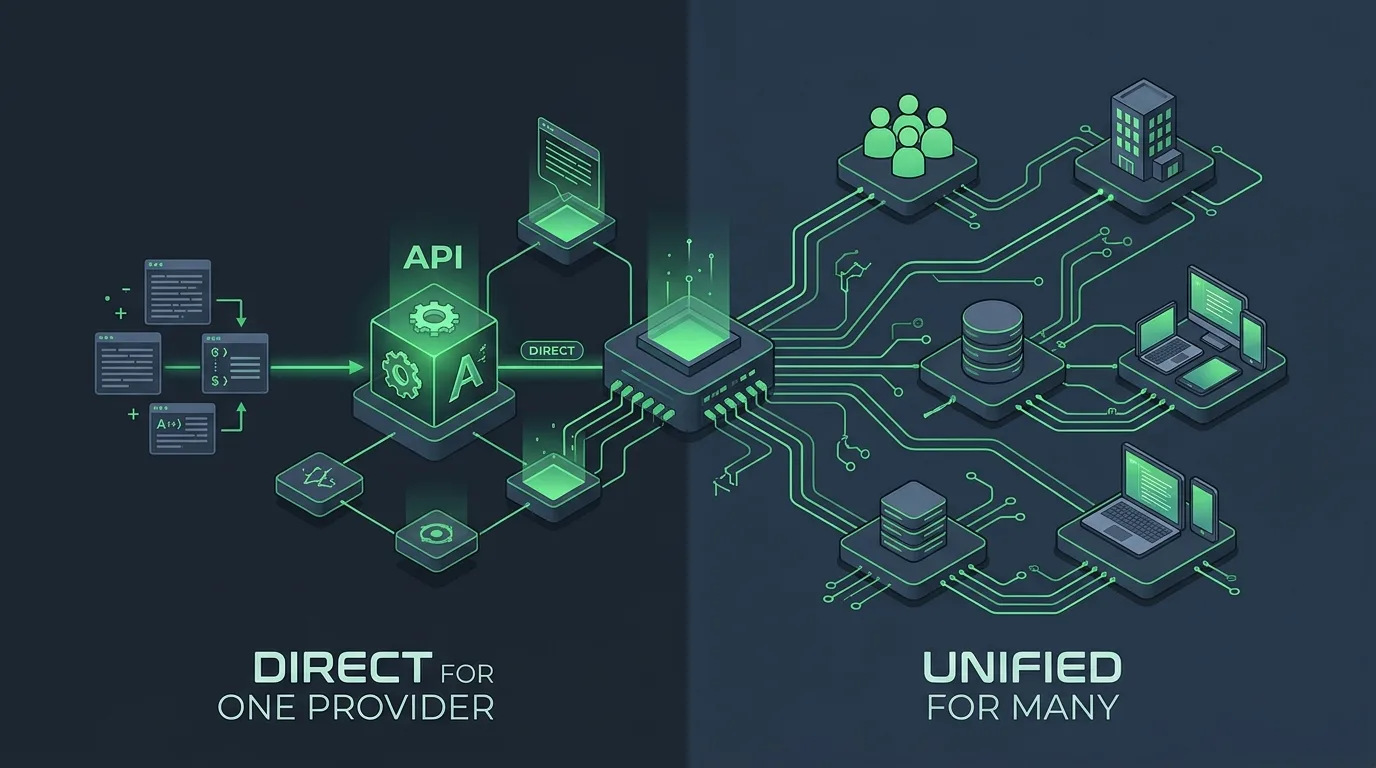
Figure: HEXOPS original illustration inspired by the topic (not a copy of the source article imagery) · Credit / further reading: dev.to
Publishing this thinking: search and AI-citation implications
Technical posts like this now compete for two audiences: human readers and retrieval systems that generate answers and cite sources. The mechanics differ.
Indexing. The article body must be server-rendered HTML at a stable canonical URL. If the code blocks and headings only exist after client-side hydration, several crawlers see an empty shell. Ship a sitemap entry, Article structured data with datePublished and dateModified, and keep the URL permanent — a migrated slug is a lost citation.
Structured content. Answer engines extract passages, not pages. Lead each section with a self-contained, declarative sentence ("The deciding constraint is not whether GPT can summarize a ticket"), then support it. Use H2s phrased as the questions people actually ask ("When does direct integration win?"). Tables and code blocks are highly extractable: the gateway header example above is quotable on its own, with no surrounding context needed. Avoid resolution-by-pronoun — "it must be idempotent" is unciteable; "the gateway's x-request-id must be idempotent" survives extraction.
llms.txt. The proposal — a Markdown file at /llms.txt with an H1, a blockquote summary, and linked H2 sections — is a cheap, low-risk addition: a curated index of your canonical technical pages in plain text. Treat it as a convenience for crawlers, not a standard. No major model provider has committed to consuming it, so it belongs alongside a sitemap and clean HTML, not instead of them.
AI citations. Citations are earned by specificity that a model can attribute. Name versions ("gpt-4o-mini, maxRetries: 3"), give concrete thresholds, and state who is responsible for a fact. Vague claims get summarized and absorbed; precise, dated, attributed claims get quoted with a link. The same applies to the article's own claims: this piece is only citable if a reader can tell which assertions are architectural opinion and which are provider behavior — and that distinction has to be visible in the text.
Decision checklist
| Signal | Direct | Gateway |
|---|---|---|
| Owning teams | One | Two or more |
| Keys to rotate | One | One (yes, really) |
| Per-tenant billing required | Add it in-service | Built in |
| Need model routing/fallback | Per-service | Central |
| Time to first summary | Hours | Days |
Start direct. Move to a gateway at the second consuming service, not before — but write the ledger join on day one, because that is the piece you cannot retrofit cheaply once three teams have invented three different answers.
Sources
- Source article: Node.js OpenAI GPT API Text Summarization: Direct for One Provider, Unified for Many
- OpenAI API reference — Chat Completions,
response_format,usageobject: https://platform.openai.com/docs/api-reference/chat - OpenAI Node.js SDK (
maxRetries,timeout, request IDs): https://github.com/openai/openai-node - llms.txt proposal (Jeremy Howard / Answer.AI): https://llmstxt.org/
- Schema.org
Articletype: https://schema.org/Article