
AI agents
There is a tell in every product announcement, and for Google's rebrand of its Spark agent into something called "Tasks" — now free to use in the US — the tell is the price tag. Free is not a discount. Free is a decision about who owns the default.
The rename itself is easy to mock. "Spark" promised magic; "Tasks" promises chores. But the rename is the most honest sentence in the whole rollout: this is not an assistant that will surprise you, it is a to-do engine wired into your calendar and your inbox. It builds meal plans, reshuffles your schedule, and hunts for recurring charges buried in your email. That is maintenance work, not wizardry — and maintenance work is exactly where habit gets built.
From magic to maintenance: the naming war is over
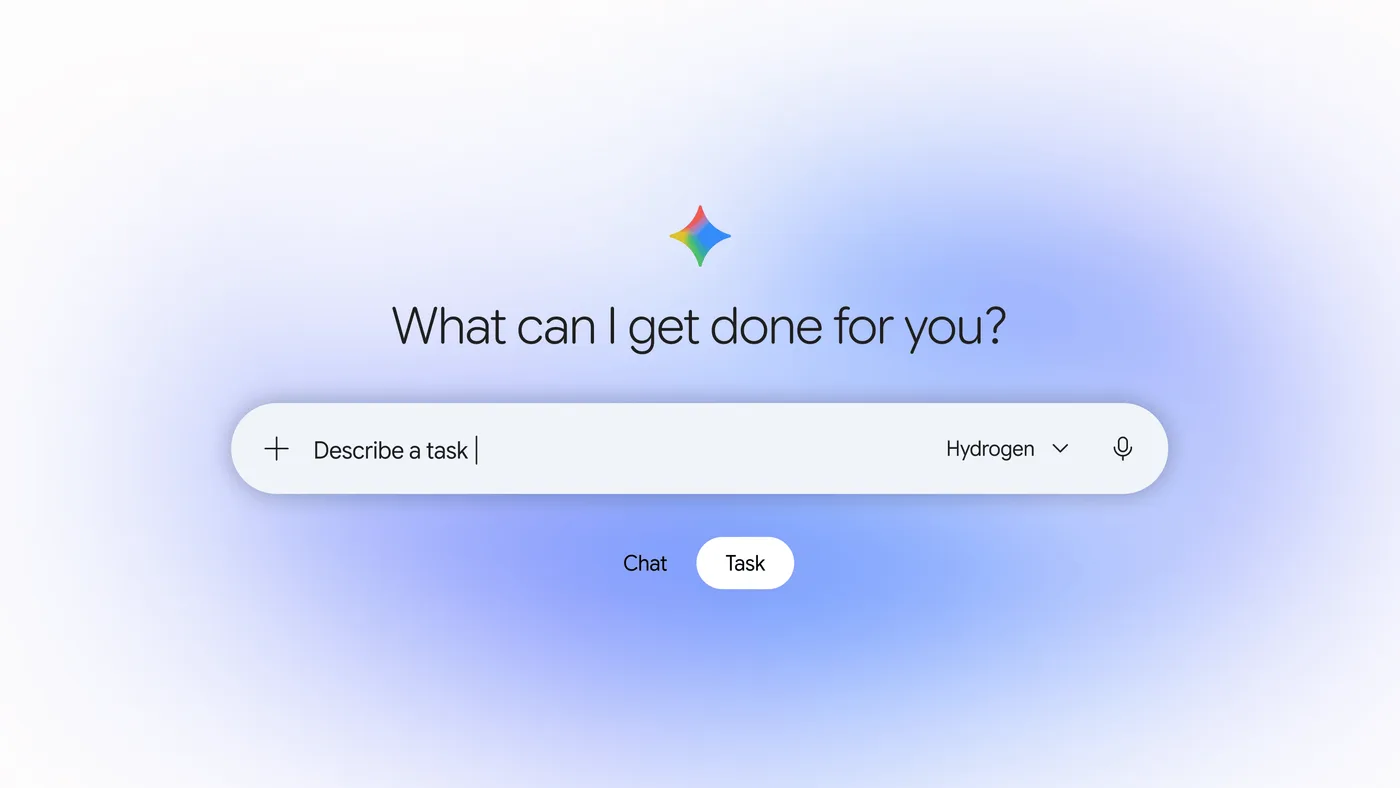
Figure: Editorial context image from the source page (preview only; rights remain with the publisher) · Credit / further reading: www.theverge.com
For two years, AI branding sold wonder. Copilots, sparks, muses, oracles. The implicit fantasy was an assistant that would think for you. What actually shipped, and what is actually useful, is narrower and far more valuable: software that closes small, boring, recurring loops without being asked twice.
Watch the verbs vendors now choose. Not "create," not "imagine" — "manage," "find," "schedule," "follow up." That vocabulary shift is the real signal. It means the industry has quietly conceded that the consumer agent market is not won by the smartest model but by the one that shows up in your morning routine.
There is a second signal in the framing. Positioning the agent as a task list rather than a chat partner lowers the expectation of brilliance and raises the expectation of reliability. That is a much harder bar to clear, because a task list that is 90% right is a task list you stop trusting.
Free is the distribution layer, not the business model
Zero price on an agent that touches email and calendar is not altruism; it is a permission play. The scarce resource in agentic software is not compute or intelligence — it is access. Access to your inbox, your calendar, your purchase history, your travel plans. Everything else is a commodity that competitors can rent by the hour.
This inverts the classic SaaS moat. The old moat was features, then data, then integrations. The new moat is scope of permission plus the accumulated mess of your personal context. Switching costs no longer come from a contract — they come from the fact that a rival assistant would start with none of your history.
Three moats that matter more than the model
- Permission surface. Whoever holds read-write access to calendar and mail can do things; everyone else can only suggest things.
- Habit loop. A tool that completes one recurring job daily beats a smarter tool used weekly. Frequency compounds trust faster than accuracy does.
- Failure legibility. Agents fail loudly. A wrongly flagged subscription is embarrassing. A wrongly moved meeting is expensive. The winner will be whoever makes mistakes cheap to spot and cheap to undo.
Notice that none of those three is "the model." That is the point. Google's latest Gemini generation, as described in the launch coverage, is the engine — but engines are increasingly rented, not owned. What is being competed for is the socket.
The counterpoint: free consumer agents will not eat everything
It would be lazy to read this as "free agents win, paid agents die." Three things push back hard.
First, consumer-grade agents are shallow by design. They optimize for delight in a five-minute session, not for auditability across a 500-person organization. The moment a workflow needs an approval chain, an identity boundary, or a paper trail, the free tier stops being relevant and procurement restarts.
Second, accountability does not scale for free. If an automated task misfires in a business process, someone has to answer for it. Vendors who want enterprise money must sell determinism, logging, and rollback — none of which are features you give away to drive installs.
Third, permission fatigue is real. Users hand over inbox access once, maybe twice. Every additional agent asking for the same keys makes the next request harder to approve. The free land grab may end not with a monopoly but with a locked door — consumers refusing to grant a fourth assistant the same access they granted the first.
There is also a quieter risk worth naming: agents that scan mail for recurring expenses are, functionally, financial surveillance performed on your behalf. That may be a fine trade. It should be a conscious one, not a checkbox clicked in a rush.
What this means for cross-border and remote teams

Figure: HEXOPS original illustration inspired by the topic (not a copy of the source article imagery) · Credit / further reading: www.theverge.com
If the assistant layer is becoming free and undifferentiated at the edge, the value moves inward — to workflow design and data hygiene. A distributed team with a clean shared calendar, consistent email tagging, and one source of truth for tasks gets dramatically more out of a free agent than a team whose context is scattered across five tools and three time zones.
The practical asymmetry is this: your competitors will have the same free agent next quarter. They will not have the same operational clarity. That gap is now the differentiator, and it is boring, unglamorous work that most teams skip.
The other shift is managerial. When an agent can quietly cancel subscriptions or move meetings, someone in the org needs to own the question "what is this thing allowed to do without asking?" That is a policy question, not an IT question, and most teams have no owner for it yet.
A 30-day action plan
Days 1–7: Inventory, don't install. List the recurring tasks your team actually repeats weekly — expense checks, schedule wrangling, status chasing. Rank them by how annoying they are, not how impressive automating them would look. Pick exactly two.
Days 8–14: Pilot with two people, not twenty. Give the agent to the two colleagues with the cleanest calendars and inboxes, and have them log every output for a week: what it got right, what it got wrong, what it silently skipped. Silent skips are the failure mode nobody measures.
Days 15–21: Write the guardrails before you scale. Define the read-only list, the act-without-asking list, and the never-touch list. Anything financial or customer-facing goes in the third bucket until you have a review habit.
Days 22–30: Decide and document. Either expand to the team with a written permission policy, or shelve it with a note on why. Then set a 90-day review — because the free tier's terms, model, and capabilities will all change before then, and your decision should be allowed to change with them.
Key takeaways
- The Spark-to-Tasks rename is more revealing than the pricing: the industry is selling reliable chores, not magic.
- Free access to calendar and email is a land grab for the permission layer — the actual moat in agentic software.
- Consumer agents are shallow; enterprise agents are accountable. Neither replaces the other.
- Permission fatigue is the most likely brake on free-agent adoption, not price.
- Teams win on data hygiene and workflow design, because the agent itself will soon be identical everywhere.
Next steps
- Audit which apps currently hold read access to your team's mail and calendar, and revoke the unused ones this week.
- Name one owner for agent policy — someone who can say "no" to a permission request.
- Start a simple log of agent errors; you cannot judge an agent you have not measured.
- Re-evaluate in 90 days rather than signing or dismissing anything permanently today.