AI APIs
Anthropic has opened a waitlist for Claude Duet, a standalone app built around agents rather than around a chat box, with access limited at first to Pro and Max subscribers. Beyond that, the company has disclosed little: no pricing, no model version, no list of supported integrations. For builders, the restraint is the story. A waitlist is how a lab ships something it believes is expensive to run and hard to make safe at scale.
What Anthropic actually shipped
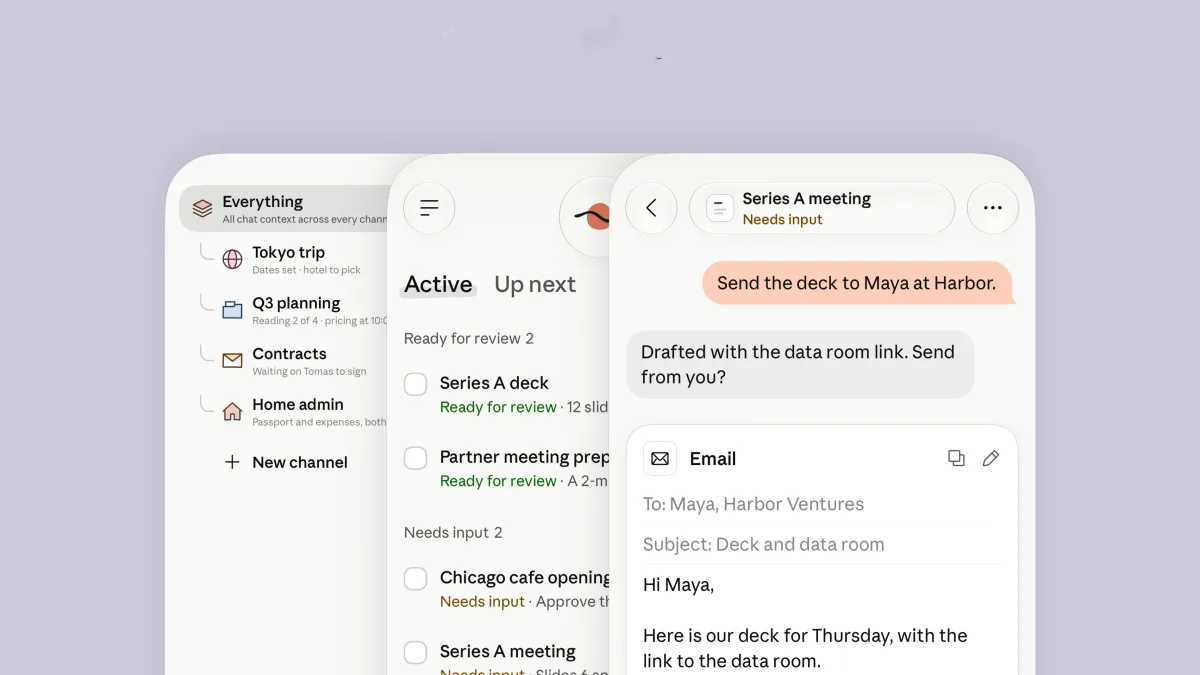
Figure: Editorial context image from the source page (preview only; rights remain with the publisher) · Credit / further reading: techcrunch.com
The confirmed surface area is small. Duet is a separate app, not a tab inside an existing chat product. It is gated behind a waitlist. It is aimed at paying subscribers on the two higher tiers. Everything else — how many tasks an agent can run concurrently, whether it executes in a sandboxed browser, whether it can touch a repository or a CRM — is unstated.
That gating pattern is familiar. Labs use waitlists to meter inference costs, to keep a support load they can actually answer, and to collect failure traces from a population small enough to interview. When the product is an agent, the last point matters more than the first two. A chat product fails visibly, in one turn. An agent fails silently, six steps into a plan, after it has already written to a database. You cannot learn that from logs alone.
The name is also a signal. A duet is two performers, not a soloist with a backing track. The framing puts the human in the loop by design rather than as a setting — review gates, checkpoints, and handoffs read as the product, not as the guardrails bolted around it.
Why builders should care
Three things shift if agent-first apps become the default interface.
The unit of work moves. Chat products meter messages. Agent products meter tasks — and tasks have wildly different costs. A pricing model that charges per seat while agents burn hours of tool calls is unstable; every lab is currently absorbing the difference. Expect metering, task budgets, or concurrency caps to be the real product decision behind any waitlist.
The integration surface becomes the moat. A chat assistant needs nothing but a text box. An agent needs credentials, scoped permissions, audit logs, and a way to undo. Whoever makes authorizing your stack painless — and revoking it equally painless — wins the enterprise conversation. This is unglamorous plumbing work, and it is where most agent launches quietly die.
Evaluation shifts from output to trajectory. Teams that spent two years building prompt test suites now need to grade the path: did the agent ask before it acted, did it pick the cheapest competent tool, did it stop when the plan stopped making sense. That tooling barely exists and is being written in public right now.
Figure: HEXOPS original illustration inspired by the topic (not a copy of the source article imagery) · Credit / further reading: techcrunch.com
The competitive frame
Anthropic is not shipping into a vacuum. Every major lab and a long tail of startups is converging on the same thesis: the chat window was an intermediate form factor, and the durable product is a delegated task. The differentiation window is short. What a lab can defend is reliability at the tail — the small percentage of runs where the plan goes sideways — plus the trust surface that lets a company hand over real credentials.
Gating to Pro and Max also tells you who pays first. Consumer and prosumer subscribers absorb the early inference cost and generate the failure data; enterprise contracts arrive once the audit trail exists. That sequencing is now standard, and worth recognizing when you read a launch post that sounds like a general-availability announcement.
Risks and open questions
The obvious ones. Cost per completed task versus cost per token. Prompt-injection exposure the moment an agent reads untrusted web pages with tool access in hand. Blast radius: what a bad plan can actually touch before a human notices. And the boring enterprise blockers — data residency, retention, SSO, and whether an agent's actions can be attributed to a named human in an audit log.
There is a product risk that gets less attention: agents that need supervision are not the product agents are sold as. If Duet requires approval on every step, it is a faster chat. If it requires none, it is a liability. The interesting design work sits in the middle band, and early users will judge the app there.
What to watch next
- Whether the waitlist converts to broader availability, and what gets metered when it does.
- The permission model: scoped tokens, per-action approval, hard spend caps.
- Whether Anthropic publishes trajectory-level evaluations rather than only task success rates.
- Trace export. If you cannot get an agent's full run out of the app, you cannot debug it or audit it.
- Third-party integrations versus a first-party toolset. The former signals a platform play.
Key takeaways
- Claude Duet is a separate, agent-first app, currently waitlisted for Pro and Max subscribers; Anthropic has not published pricing, model details, or integration lists.
- The waitlist is a cost and safety instrument as much as a marketing one — agent runs are expensive and fail silently.
- Metering, permission scoping, and trajectory-level evals are the under-discussed decisions that determine whether agent products hold up.
- The "duet" framing implies human-in-the-loop checkpoints are core to the design, not optional settings.
Next steps
- If you are on Pro or Max, join the waitlist; once in, count steps per task and note exactly where approval is required.
- For internal builds, add per-task budgets and a kill switch before you add another tool integration.
- Start grading trajectories now, even manually. A rubric of five checks beats no eval at all.
- Keep a revocation runbook: every credential your agent holds should be revocable in under five minutes.
- Watch the documentation and changelog rather than the launch posts; permission models show up there first.
Sources
- TechCrunch AI — Claude Duet app is Anthropic's bet on agents